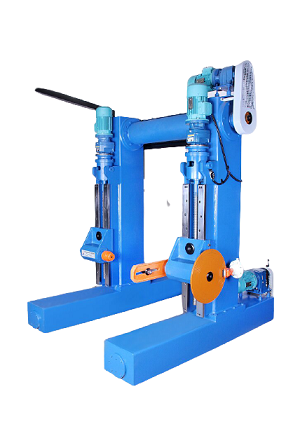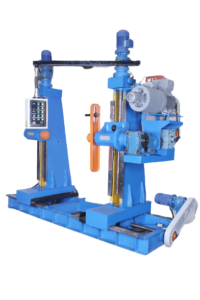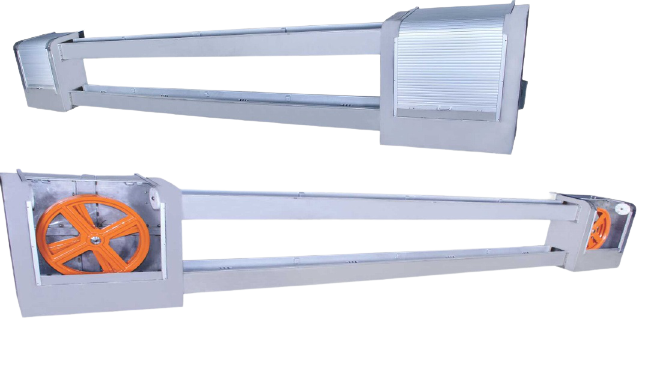
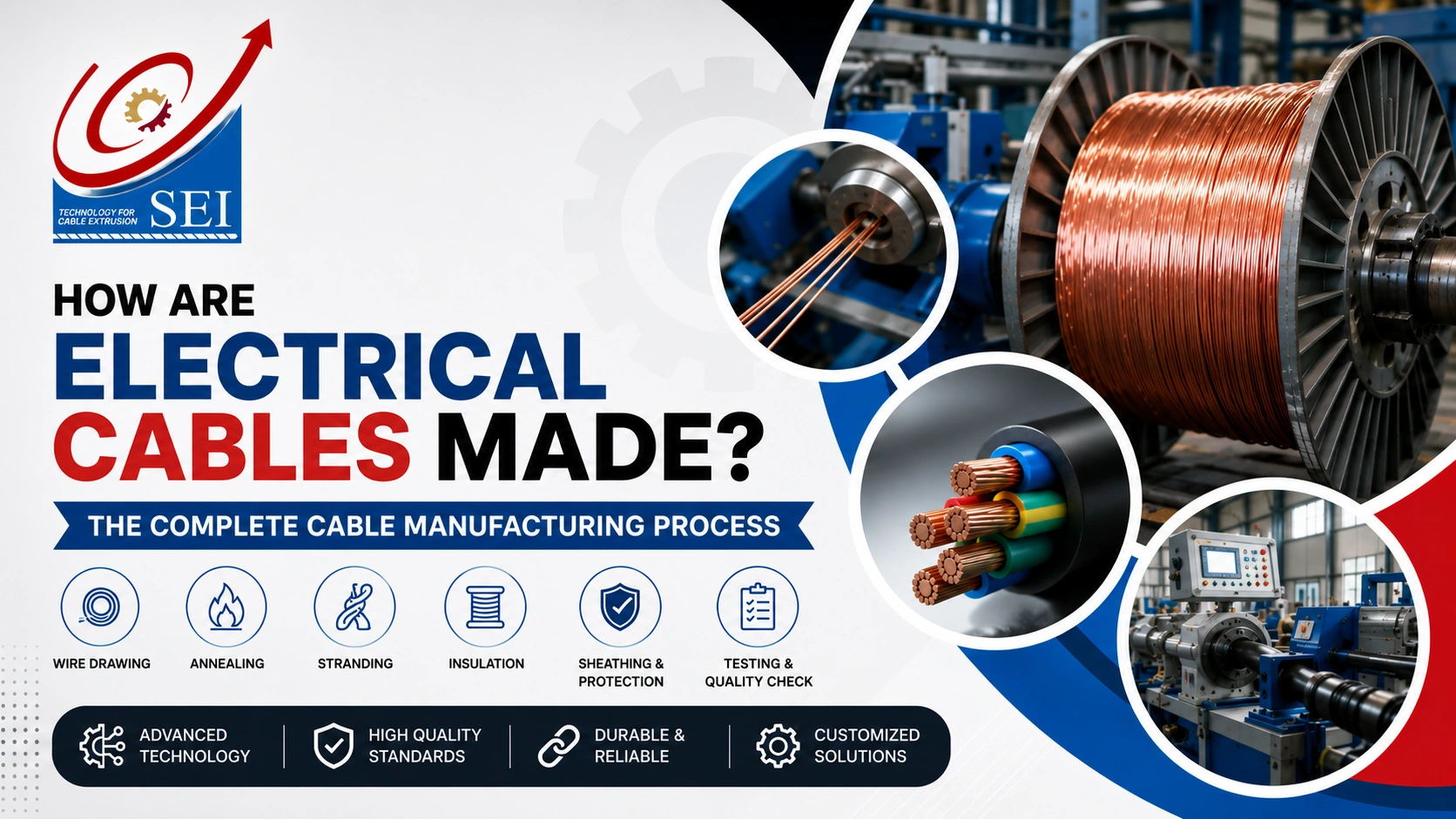
Electrical cables are indispensable for modern-day infrastructure needs, as they provide a means for electricity and information to be transmitted safely in residential, commercial, and industrial establishments. From providing power to lighting your home to running machinery or communication network installations, cables are indispensable parts of daily life. Many people wonder how is wire made, and how are wires made before they become complete electrical cables. The answer is provided by the complex process of cable manufacturing.
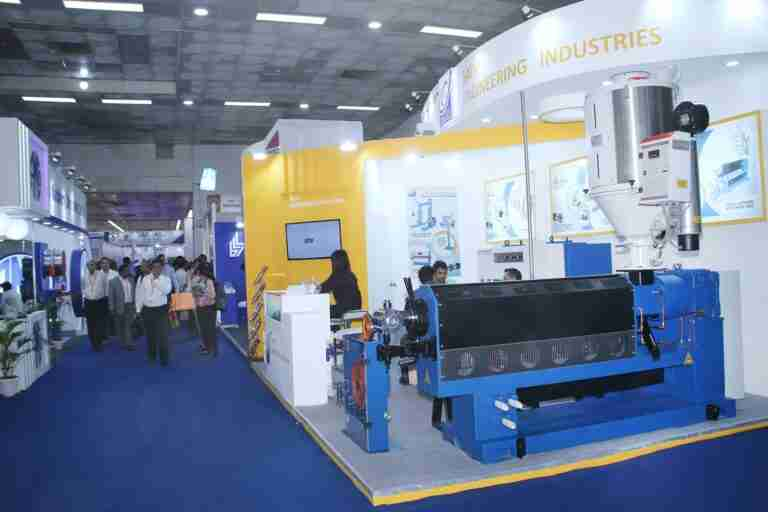
Saini Engineering Industries knows the importance of quality and efficiency when it comes to the manufacture of electrical wire and cables. Cable making involves turning copper and aluminum rods into conductors by using electrical wire drawing machines. Once done, conductors can be annealed, stranded, insulated, and tested for maximum performance and durability. Modern cable making process ensures cables comply with industry standards in addition to providing good performance and extended durability.
The Complete Cable Manufacturing Process
1. Raw Material Selection
The manufacturing process begins with selecting premium-grade copper or aluminum. These metals are chosen for their excellent conductivity and durability.
2. Wire Drawing
Large metal rods are passed through a series of dies to reduce their diameter and create thin electrical wires. This is the first stage that answers the question, how is wire made.
3. Annealing Process
The drawn electrical wire is heated and cooled under controlled conditions to improve flexibility and reduce brittleness.
4. Stranding
Multiple electrical wires are twisted together to create a conductor with higher strength and flexibility. This is an important stage in how are wires made for industrial applications.
5. Insulation
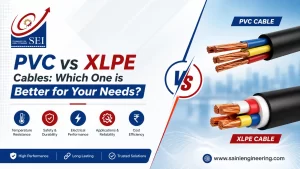
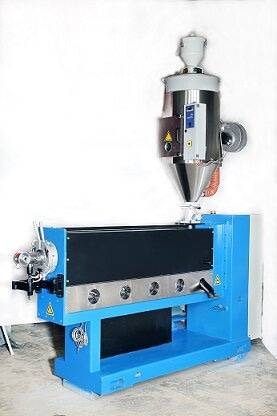
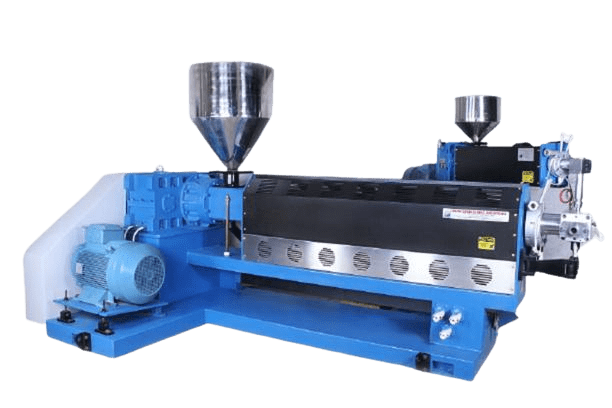
Protective insulation materials such as PVC, XLPE, or polyethylene are applied to the conductor using extrusion technology.
6. Shielding and Armoring
Specialized cables may include shielding to prevent interference and armoring to provide mechanical protection.
7. Sheathing
An outer protective sheath is added to protect the cable from environmental conditions, moisture, chemicals, and abrasion.
8. Testing and Quality Inspection
Every cable undergoes rigorous testing for conductivity, insulation resistance, flexibility, and voltage endurance before reaching the market.
Features of Modern Electrical Cables
- High electrical cables conductivity
- Excellent flexibility and durability
- Heat and flame-resistant designs
- Corrosion-resistant construction
- Long operational lifespan
- Superior insulation performance
- Enhanced safety standards
- Suitable for indoor and outdoor installations
- Low maintenance requirements
- Reliable performance in harsh environments
Benefits of High-Quality Cable Manufacturing
Investing in professionally manufactured electrical cables offers several advantages:
- Improved electrical efficiency
- Reduced power losses
- Enhanced operational safety
- Longer service life
- Better resistance to environmental conditions
- Lower maintenance costs
- Reliable power transmission
- Compliance with industry standards
- Increased productivity in industrial operations
- Cost-effective long-term performance
Applications of Electrical Cables
Modern electrical cables are used across numerous industries and sectors, including:
Residential Applications
- Home wiring systems
- Lighting installations
- Smart home technologies
- Security systems
Commercial Applications
- Office buildings
- Shopping malls
- Hospitals
- Educational institutions
Industrial Applications
- Manufacturing plants
- Processing industries
- Heavy machinery operations
- Automation systems
Infrastructure Projects
- Power distribution networks
- Railway systems
- Airports
- Renewable energy installations
Communication Sector
- Data transmission
- Internet infrastructure
- Telecommunication networks
- Fiber optic systems
Why Choose Saini Engineering Industries?
We at Saini Engineering Industries are dedicated to offering reliable engineering services and expert manufacturing solutions to the electrical wire & electrical cables industry. We take pride in providing innovative products that meet high-quality standards.
Our Strengths
- Industry-focused engineering expertise
- Commitment to quality standards
- Advanced manufacturing solutions
- Reliable customer support
- Cost-effective production technologies
- Focus on efficiency and productivity
- Continuous innovation and improvement
Importance of Quality Control in Cable Making
The quality control aspect is an important consideration when producing cables. This is because any small problem in the electrical cables affects the overall performance and safety of the cables. For this reason, quality tests are carried out several times during manufacture.
Quality checks include:
- Conductor resistance testing
- Insulation thickness measurement
- High-voltage testing
- Tensile strength testing
- Flexibility testing
- Environmental resistance testing
These procedures ensure that every cable delivers reliable performance under real-world operating conditions.
Future of Cable Manufacturing
The manufacturing of cables in the future will be determined by factors such as automation, computerized monitoring, and sustainable manufacturing. Today’s companies have become very creative in the manufacture of more efficient cables that help renewable energy sources, cars that are powered by electricity, smart cities, and more automated industries.
Manufacture of cables will prove crucial as technology and development continue to make more demands on power supply and communication infrastructure.
Frequently Asked Questions (FAQs)
How is wire made?
Wire is made by drawing copper or aluminum rods through a series of dies that gradually reduce their diameter to the required size.
How are wires made stronger?
Wires are strengthened through annealing, stranding, and the addition of protective insulation and sheathing materials.
What materials are commonly used in cable manufacturing?
Copper and aluminum are the most commonly used conductor materials due to their excellent electrical conductivity.
Why is insulation important in cables?
Insulation prevents electrical leakage, enhances safety, and protects the conductor from environmental damage.
How to make cables suitable for industrial applications?
Industrial cables are manufactured using high-quality conductors, advanced insulation materials, shielding, armoring, and strict quality testing procedures.
Conclusion
Knowing about wire manufacture, wires production, and the entire cable manufacturing process sheds light on the level of engineering skill needed for producing electrical cables. Each step from raw material procurement to quality testing plays a critical role in determining the quality of the final product. Here at Saini Engineering Industries, we know that technology, manufacturing skills, and strict quality control are the key factors behind successful cable production. No matter how industries keep developing, good cables will always be a key prerequisite for development.