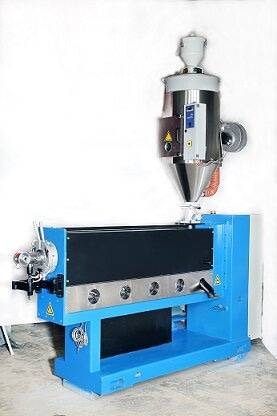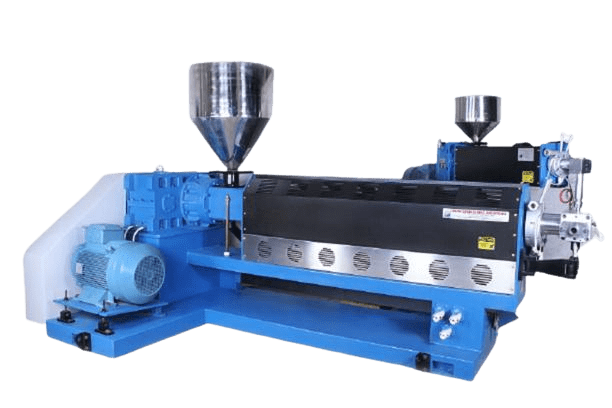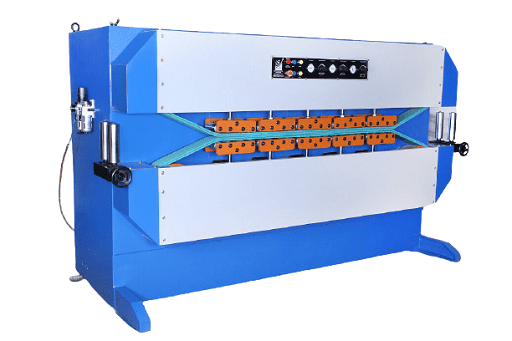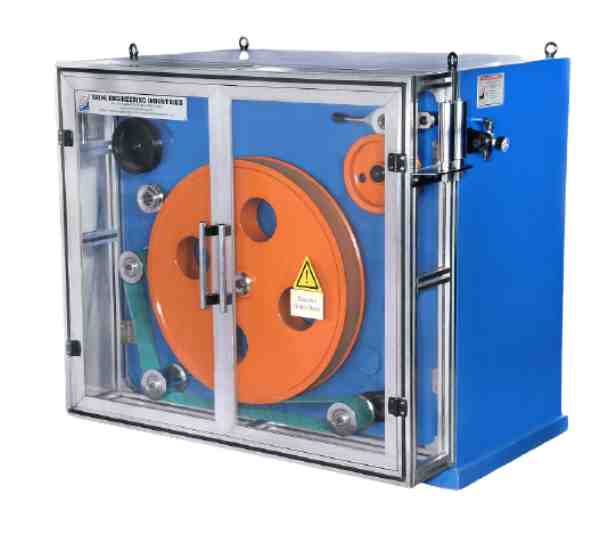
Introduction to Electrical Wiring Machines for House
Modern systems have become far more advanced than ever before, and a variety of new wiring machines now enable home wiring to be installed safely and rapidly. Whether you are building a new home or installing an electrical system in an existing one, selecting the right equipment is crucial for ensuring a reliable and long-lasting electrical setup.
Today, professional electricians and contractors have access to a range of specialized machines that help them carry out home wiring tasks with greater ease, speed, and precision. In this detailed guide, Saini Engineering Company outlines the most popular types of wiring and machinery that can help streamline the process.
Why Are Electrical Wiring Machines Important for House Wiring?
In modern days’ house wiring process, more than simply good wires and good electricians are required. Modern machines are required that will make the work more precise and efficient and every electrical connection should be up to date in terms of safety regulations. Efficient electrical wiring does not only make your house safe from any electrical threats but also makes your whole electrical distribution process more efficient.
Regardless of whether the building is a simple residential house or luxurious villa, professional machines help you do the house electrical wiring process efficiently.
What Are Electrical Wiring Machines?
Electrical wiring machines refer to special tools and automation systems that are used to cut, strip, bend, pull, test, and arrange electrical wires in both residential and commercial wiring projects. The use of electrical wiring machines helps improve the quality of installations, saving time and cost.
While manual approaches have not been able to achieve this, the current electrical wiring machines help provide quality house wiring by ensuring accuracy and neat arrangement of the wires. Professional electricians use the wiring machines to ensure quality and safe electrical wiring of all houses.
How Electrical Wiring Machines Work
The various machines used in the wiring process perform distinct functions. Some machines automatically measure and cut wires, while others strip the insulation without damaging the conductor. Certain machines bend conduits, whereas others test the electrical wiring circuit to ensure it is functioning correctly.
By using these machines in tandem, an electrician can complete home wiring much faster than by working manually. This systematic approach ensures superior wiring quality, meets the specific wiring requirements of the home, simplifies the task, and delivers better results.
Why Modern Homes Need Advanced Wiring Equipment
Smart homes, modular housing, and energy-efficient structures require highly precise electrical wiring. Even a minor error in wiring can impact appliance performance, increase repair costs, or pose serious safety risks. Consequently, modern electrical installers prefer using high-tech wiring equipment over manual methods.
High-quality machinery ensures consistent cable lengths, robust connections, and precise conduit positioning for any home wiring task. This enhances wiring reliability, simplifies the implementation of complex electrical layouts, facilitates the management of diverse wiring systems, and guarantees a dependable wiring infrastructure for the future.
Benefits of Using Electrical Wiring Machines
Faster Installation Process
Electrical wiring machines reduce manual work and automate repetitive tasks such as wire cutting, stripping, and measuring. This allows electricians to complete house wiring projects in less time while maintaining excellent installation quality and ensuring professional electrical wiring results.
Higher Accuracy
Modern machines provide precise measurements and clean cable preparation for every house electrical wiring project. Accurate processing minimizes material wastage, supports all common wiring types, and improves the overall reliability of home wiring installations.
Improved Safety
Automated equipment reduces the chances of damaged cables, loose connections, and installation mistakes. Proper machine-assisted house wiring helps maintain electrical safety standards while producing durable electrical wiring systems for residential buildings.
Reduced Labor Costs
Machines complete multiple wiring operations in a shorter period, allowing contractors to handle larger projects with fewer resources. This makes professional house electrical wiring more economical while maintaining consistent quality across different wiring types used in modern home wiring projects.
Types of Machines Used in House Electrical Wiring
For residential house electrical installation, there are different kinds of machinery required in different phases of the operation. There are machines that are needed for cable preparation, some for conduit installation, and some for testing the whole system to ensure that it is safe. The type of machine that would be chosen depends on a number of factors, including the size of the project, cable specifications, and the type of installation.
In this section below, we will be looking at the six kinds of electrical wiring machines used in the home. We will be discussing their features, working mechanisms, uses, and advantages, among other things. In addition, we will be looking at the recommendations made by Saini Engineering for choosing the appropriate machine according to the type of wiring.
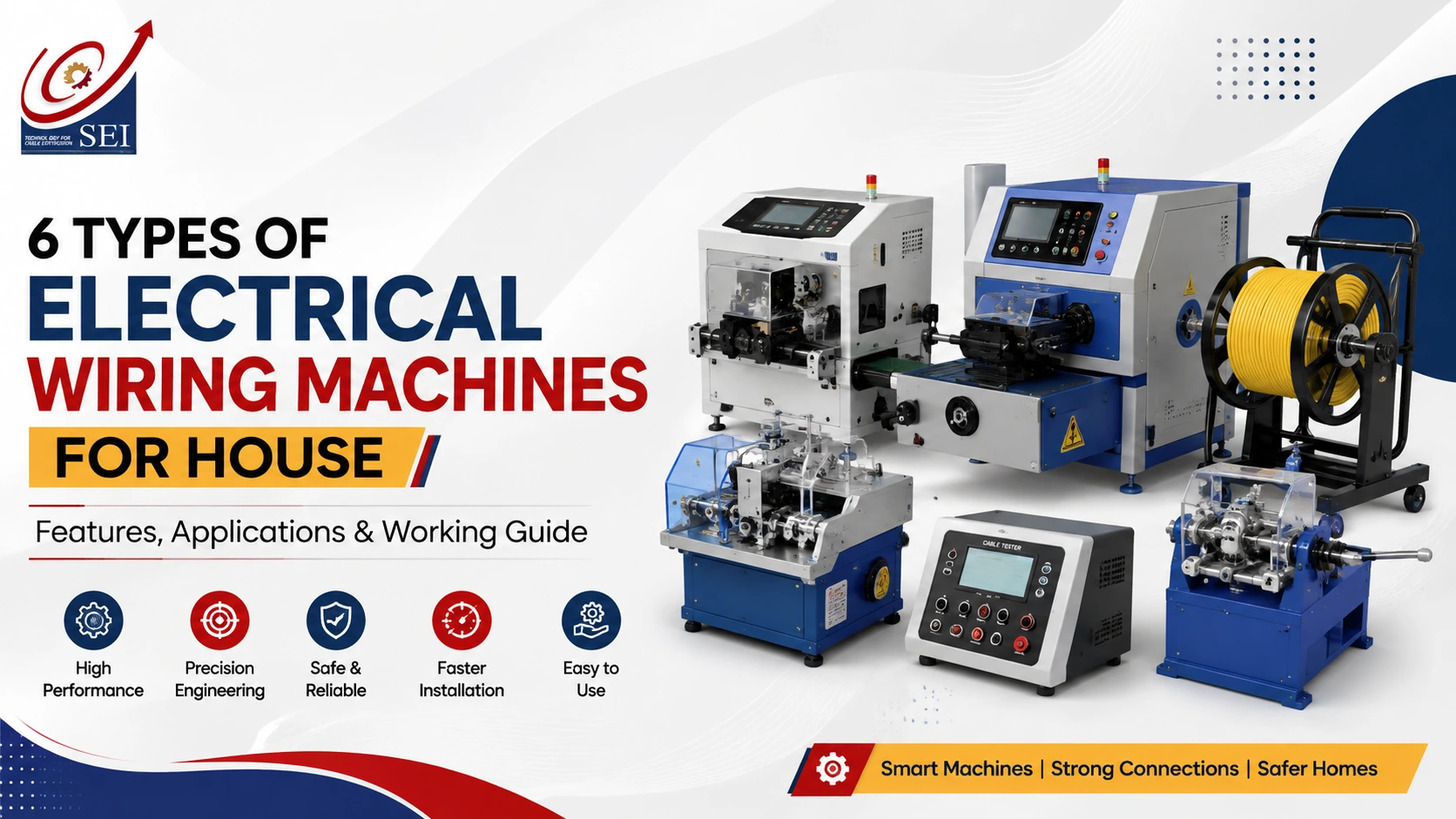
6 Types of Electrical Wiring Machines for House
Residential electrical installation in the current day requires the use of various machines, which will enhance efficiency, precision, and safety. Each machine has its specific function starting from preparing electrical wires to testing the electrical wires. Selecting the appropriate equipment ensures efficient house wiring, reliable electrical wiring, and efficient house electrical wiring performance.
Being an electrician, a contractor, or a builder, knowing these types of electrical machines is important for selecting the appropriate machine for the installation of wiring in residential houses. Below are the six most used electrical machines for current houses.
1. Automatic Wire Cutting and Stripping Machine
One of the most important machines used during house wiring installations is the Automatic Wire Cutting and Stripping Machine. This machine automatically measures cable length, makes accurate cuts of the wire, and strips the wire of insulation without injuring the conductor. The use of this machine helps reduce manual labor and increases efficiency.
This machine is most favored by professional electricians due to its ability to produce identical wire length for each electrical wiring installation. This machine suits well in house electrical wiring works in which many wires have to be prepared in a short time. This machine can handle various types of wires, including PVC, copper, aluminum, and flexible wires.
Features
- Fully automatic wire cutting and stripping
- Adjustable wire length settings
- High cutting accuracy
- Supports multiple cable sizes
- Fast production speed
- Low material wastage
Working Process
The operator enters the required wire length into the control panel. The machine automatically pulls the cable, measures the length, cuts it precisely, and removes insulation from both ends. The prepared wire is then ready for immediate installation.
Applications
- Residential electrical installation
- Apartment wiring
- Smart home projects
- Electrical panel preparation
- Cable assembly workshops
2. Cable Pulling Machine
The Cable Pulling Machine is the equipment that can pull electrical cables through conduits without damaging the insulation. The lengthy conduits in large residential houses make manual pulling of cables a cumbersome job, but this machine makes the process easy and less laborious.
The uniform pulling tension of this equipment ensures easy electrical wiring in walls and ceilings. The equipment finds extensive use in electrical wiring of houses for villas, apartments, and commercial residences. Various wiring needs different pulling tensions; hence, the machine is significant for professional home wiring contractors.
Features
- High pulling capacity
- Compact and portable design
- Smooth cable feeding
- Low cable damage
- Easy operation
- Heavy-duty motor
Working Process
The cable is connected to the pulling rope or grip. The motor rotates and pulls the cable through the conduit while maintaining controlled tension. This prevents cable twisting, stretching, or insulation damage.
Applications
- Multi-storey residential buildings
- Underground conduit installation
- Long cable routing
- Smart home electrical systems
- Industrial electrical projects
3. Electrical Conduit Bending Machine
Electrical conduits protect wires from damage and ensure a high-quality installation. A conduit bending machine allows conduits to be bent precisely without causing damage or breakage. Proper conduit bending is essential for high-quality home wiring and the correct installation of cables.
Nowadays, with the help of bending machines, electricians can create uniform bends in accordance with construction plans. This minimizes errors and improves the quality of the electrical wiring. During home wiring, the correct alignment of conduits facilitates various types of wiring setups.
Features
- Precise bending angle
- Strong steel construction
- Hydraulic or electric operation
- Suitable for different conduit sizes
- High bending accuracy
- Easy handling
Working Process
The conduit is placed inside the bending die. Hydraulic or electric pressure bends the conduit to the required angle without damaging its structure. The finished conduit is then installed before cable pulling.
Applications
- Residential buildings
- Commercial projects
- Factory electrical systems
- Office wiring
- Underground conduit layouts
4. Wire Crimping Machine
A wire crimping machine helps attach terminals, connectors, and lugs to electrical wires. A good electrical connection improves current flow and reduces power loss. Proper crimping is essential for the safe installation of household wiring.
Using a machine instead of manual crimping ensures consistent pressure during the connection process. This enhances the quality of the electrical wiring—particularly in residential setups, where numerous switches and sockets need to be connected to terminals.
Features
- High crimping accuracy
- Fast connector installation
- Uniform pressure
- Durable construction
- Automatic operation
- Low maintenance
Working Process
The wire is inserted into the connector, and the machine applies controlled pressure to lock the terminal firmly. The completed connection becomes ready for installation inside the electrical circuit.
Applications
- Switchboard manufacturing
- Distribution panels
- Residential wiring
- Electrical maintenance
- Cable harness production
5. Cable Testing Machine
Every electrical circuit in a home should be tested before installation. A cable testing machine helps detect issues—such as short circuits, open circuits, incorrect wiring, and faulty insulation—before the power supply is turned on.
Testing machines play a crucial role in ensuring the quality of home wiring, as they guarantee that all circuits function correctly after testing. Electricians use them to verify the safety of the electrical wiring system. When testing is performed correctly, the specific type of wiring used does not matter.
Features
- Fault detection
- Continuity testing
- Insulation checking
- Fast testing speed
- User-friendly display
- Accurate measurement
Working Process
The machine connects to the electrical circuit and sends test signals through the wiring. It analyzes electrical continuity and detects any faults or incorrect wiring before commissioning.
Applications
- Residential projects
- New building inspections
- Electrical maintenance
- Circuit verification
- Safety inspections
6. Cable Coiling and Rewinding Machine
Cable coiling and rewinding machines neatly coil electrical cables, making them easy to store, transport, and install. Properly coiled cables do not tangle and are easier to handle, allowing work at construction sites—such as residential wiring—to proceed quickly and efficiently.
Professionals use these machines before installing electrical cables in homes. Proper cable management enhances the performance of the electrical system, simplifies the wiring process, suits various types of wiring setups, and accelerates the overall installation work.
Features
- Automatic cable winding
- Adjustable coil diameter
- High operating speed
- Easy cable handling
- Compact design
- Reduced cable wastage
Working Process
The cable passes through guiding rollers while the rotating drum winds it into uniform coils. The finished cable bundle becomes easy to transport and install.
Applications
- Cable manufacturing units
- Electrical warehouses
- Residential installation projects
- Cable distributors
- Electrical contractors
How to Choose the Right Electrical Wiring Machine
The choice of wiring machines is determined by the scale of the work, the type of cables used, the complexity of the installation process, and the productivity needed. For smaller residential jobs, machines that cut, strip and crimp wires should be sufficient. For bigger construction projects, there are also cable pulling, conduit bending, testing, and cable coiling machines to consider.
In addition, a good manufacturing company is important to ensure the quality and durability of the machine. The main focus of Saini Engineering is to provide quality machines that will assist professionals in doing house wiring, electrical wiring, and house electrical wiring jobs with ease.
Technical Specifications of Electrical Wiring Machines
| Specification | Details |
|---|---|
| Machine Type | Electrical Wiring Machine |
| Automation | Semi-Automatic / Fully Automatic |
| Wire Size | 0.5 mm² – 25 mm² |
| Wire Cutting Length | 1 – 99,999 mm |
| Cutting Accuracy | ±0.2 mm |
| Operating Voltage | 220V / 380V, 50 Hz |
| Power Consumption | 0.75 – 3.0 kW |
| Control System | PLC with Touch Screen |
| Drive System | Servo Motor |
| Production Capacity | Up to 6,000 Wires/Hour* |
| Supported Cables | Copper, Aluminum, PVC & Flexible Wires |
| Applications | House Wiring, Home Wiring, Electrical Panel & Cable Processing |
Benefits of Using Electrical Wiring Machines for House Installation
Modern electrical wiring machines have revolutionized the installation process of electrical systems for homes. Unlike the traditional methods that relied entirely on manual labor, electricians nowadays use high-quality machinery that ensures efficiency, safety, and accuracy in their work. From an ordinary apartment to a luxurious villa, the use of such machines makes it easier to undertake electrical wiring for houses.
Using appropriate machines ensures not only quick electrical wiring installation but also good-quality electrical wiring. The machinery makes it possible to measure, strip, and connect every cable effectively. As a consequence, it leads to the creation of reliable, versatile, and lasting electrical wiring for houses.
Key Benefits
- Faster installation with reduced manual effort.
- Accurate wire cutting and stripping.
- Improved electrical safety and fewer installation errors.
- Lower labor costs and higher productivity.
- Better cable management and organized installations.
- Supports all major wiring types used in residential buildings.
- Reduces cable wastage and material costs.
- Increases the lifespan of the complete home wiring system.
- Provides professional finishing for house electrical wiring.
- Ensures consistent quality in every electrical wiring project.
Maintenance Tips for Electrical Wiring Machines
Maintenance is key to ensuring that your electrical wiring machines work efficiently for many years to come. When your machines are well maintained, they work efficiently, save energy, and minimize unexpected downtimes during the wiring process. Not maintaining your machinery can impact the quality of house wiring and the efficiency of the machines.
Regularly cleaning your machines after each wiring operation ensures that there is no dust, insulation material, or metallic components that interfere with the efficiency of your machines. Lubrication, inspection, blade replacement, and calibration of measurement tools ensure that the electrical wiring process runs smoothly. Maintenance also ensures better quality of electrical wiring in homes.
Maintenance Checklist
- Clean the machine after daily use.
- Inspect cutting blades regularly.
- Lubricate moving components.
- Check electrical wiring connections.
- Tighten loose nuts and bolts.
- Replace damaged rollers immediately.
- Inspect motors for overheating.
- Calibrate measurement systems periodically.
- Store machines in a dry environment.
- Follow the manufacturer’s maintenance schedule.
How to Choose the Best Electrical Wiring Machine
Machine selection is determined by the size of the project, cable requirements, and workload. Contractors involved in big residential projects need to choose machines that have high capacity and automation, whereas electricians can make do with smaller and portable machines for their projects. Using a machine that has high automation levels makes work faster.
When choosing any piece of equipment, there are several considerations such as automation level, accuracy of cuts, type of cables, power usage, durability, maintenance, and after-sales services. This will ensure that wiring is smooth and done properly, as well as ensure that wiring for the house is effective.
Why Choose Saini Engineering?
The choice of a reputable company while buying electrical wiring machines is just as crucial as choosing the best quality equipment. The machines of Saini Engineering offer you reliable, highly productive, and durable solutions for the needs of today’s electricians, contractors, and construction companies.
All of our machines are created using innovative technologies and precise engineering, making the process of your house wiring easy. Our machines provide superb performance in electrical wiring, can be used for any application of house electrical wiring, handle any wiring types, and allow you to install your home wiring fast and accurately.
Why Professionals Trust Saini Engineering
- Premium-quality manufacturing standards.
- Advanced and modern machine technology.
- High operational efficiency.
- Durable and robust construction.
- Precision engineering for accurate performance.
- Easy operation and low maintenance.
- Energy-efficient machine designs.
- Excellent customer support.
- Competitive pricing.
- Reliable solutions for residential and commercial projects.
Frequently Asked Questions (FAQs)
1. What is an electrical wiring machine?
An electrical wiring machine is specialized equipment used for cutting, stripping, bending, pulling, testing, or organizing electrical cables during house wiring and other electrical installation projects.
2. Which machine is most important for house wiring?
The Automatic Wire Cutting and Stripping Machine is considered one of the most important machines because it prepares wires accurately and speeds up electrical wiring installations.
3. Are electrical wiring machines suitable for home projects?
Yes. Many compact machines are specially designed for house electrical wiring and small residential home wiring projects, making installations faster and more accurate.
4. Why is cable testing important after installation?
Cable testing helps detect short circuits, loose connections, and insulation faults before power is supplied, ensuring safe and reliable electrical wiring.
5. Can one machine support different wiring types?
Yes. Many modern machines are designed to work with multiple wiring types, including PVC-insulated, copper, aluminum, and flexible electrical cables.
6. Do electrical wiring machines reduce labor costs?
Absolutely. Automation minimizes manual work, improves productivity, and reduces installation time, making house wiring projects more cost-effective.
7. How often should wiring machines be maintained?
Routine cleaning after every use and periodic servicing based on the manufacturer’s recommendations help maintain accuracy and extend machine life.
8. What factors should I consider before buying a wiring machine?
Look for machine quality, automation level, supported cable sizes, operating speed, durability, energy efficiency, maintenance requirements, and after-sales service.
9. Are automatic wiring machines better than manual tools?
Yes. Automatic machines offer higher precision, faster operation, lower material wastage, and improved safety compared to manual tools.
10. Why choose Saini Engineering for electrical wiring machines?
Saini Engineering offers dependable, high-quality machines engineered for superior performance, helping professionals complete house wiring, electrical wiring, house electrical wiring, and home wiring projects efficiently across all common wiring types.
Conclusion
The quality of any house wiring system not only involves craftsmanship but also depends heavily on the type of machinery employed at various stages of wiring processes. From wire preparation and conduit bending to cable testing and coiling, each one of these machines is important in providing a safe and efficient house wiring service.
Knowledge of the six electrical wiring machines along with their properties, applications, and workings will help make better investments. With the help of Saini Engineering, you can have quality electrical wiring, reliable house electrical wiring services, support for various wiring systems, and a durable home wiring system.