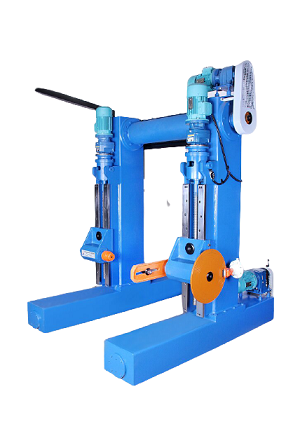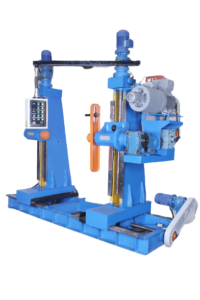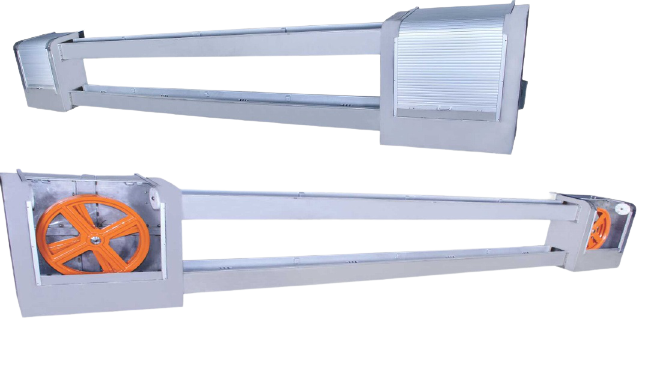
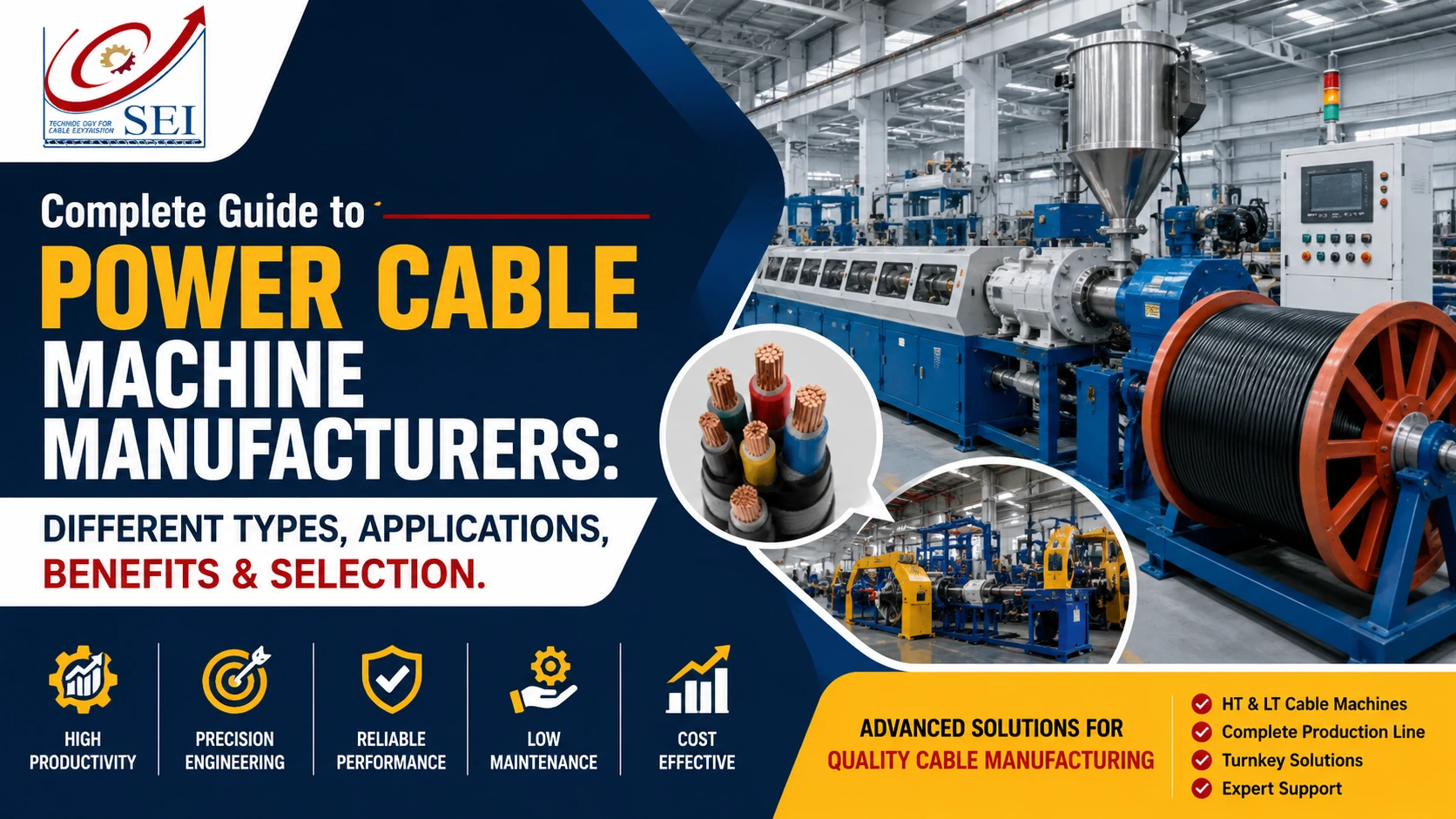
Electric cables are very vital in present-day electrical engineering since they help ensure that electricity is conveyed safely from one place to another through various households, commercial places, factories, and utilities. Due to the rise in the demand for electrical systems that operate effectively in the global marketplace, there is a need for Power Cable Machine Manufacturers. Firms such as Saini Engineering have played an instrumental role in ensuring the design and manufacture of sophisticated cable making machinery that helps ensure that the electric cables produced are top-quality in terms of their conductivity and durability. Whether the electric cables are of low voltage or high voltage, having the correct machinery will help ensure proper manufacturing of these cables.
There has been significant development in the field of cable manufacturing over the past few years. Innovations such as automation in production lines, sophisticated extrusion systems, intelligent quality control machines, and energy-efficient production processes among others have helped transform this industry. For firms to be productive in cable manufacturing and keep to international quality standards, modern machinery has become a necessity. Having an understanding of the various cable manufacturing machines will help the firms make the right choices.
Understanding Power Cable Machine Manufacturers
The Power Cable Machine is an industrial machine made to produce electrical cables meant for power distribution and transmission. This machine carries out many processes including wire drawing, annealing, bunching, stranding, insulation extrusion, armoring, sheathing and testing. The cable type determines how it is manufactured and hence there is a different kind of machine for making different kinds of cables.
There are automated cable manufacturing plants that do not waste any materials in the process while increasing the rate of production. This will guarantee high quality in terms of good conductor dimension, precise insulation thickness, cable flexibility and good electrical characteristics. Selecting the right equipment is one of the most crucial things in a cable company.
Why Power Cable Manufacturing Machines Are Important
The performance of any electrical cable not only depends upon the materials used but also depends on the manufacturing process of the cables. State-of-the-art machinery ensures that all cables are manufactured to high-quality standards, ensuring reliable conductivity and durability. This becomes more significant when dealing with special cables such as HT cables.
The use of automated manufacturing machinery increases the efficiency of the manufacturing process as there is less chance of human errors and increased consistency in the manufacturing process. Machines are fitted with intelligent monitoring mechanisms that ensure all types of cables are manufactured with extreme precision and reliability.
Main Stages of Cable Manufacturing
The cable manufacturing process is done in a series of interrelated manufacturing steps that are done using specific machinery. First, the conductor manufacturing process includes the use of a copper or aluminum wire drawing process, whereby the metal rods are drawn into the needed diameter for the conductor. Afterward, there is annealing of the conductor to make it flexible, and then there is the stranding process whereby different bunches of conductors are made.
After the conductor manufacturing process, the next step is insulating the conductors using extrusion machines, and the material used could be PVC, XLPE, or PE depending on the type of cable. Other processes that may follow may be the application of shield, armouring, outer sheath, spark test, diameter test, and cable winding.
Types of Power Cable Machines Used in Manufacturing
Different cable products require different production equipment. Modern cable factories operate multiple specialized machines designed to manufacture residential wires, industrial power cables, communication cables, and transmission cables. Selecting appropriate machinery depends on production capacity, raw materials, cable specifications, and customer requirements.
Manufacturers producing various types of cable typically invest in integrated production lines capable of handling multiple processes automatically. These systems improve manufacturing efficiency while ensuring that each cable type maintains consistent dimensions, insulation quality, and electrical performance throughout production.
Wire Drawing Machine
The wire drawing machine is the first and one of the most important machines in cable manufacturing. It reduces the diameter of copper or aluminum rods through a series of precision dies until the desired conductor size is achieved. This process creates smooth, high-quality conductors suitable for manufacturing different types of cable used in electrical installations.
Advanced wire drawing machines feature automatic lubrication systems, precise tension control, and high-speed operation that improve production efficiency. High-quality conductors produced by these machines provide excellent electrical conductivity, making them ideal for both standard electrical cables and specialized HT cable applications requiring superior performance.
Annealing Machine
After wire drawing, conductors become harder due to mechanical deformation. Annealing machines heat the conductor under controlled conditions to restore its flexibility and improve electrical conductivity. This process is essential for manufacturing durable and flexible cables that meet modern industry standards.
Proper annealing ensures better conductor performance during subsequent manufacturing stages such as stranding and insulation extrusion. Every premium cable type benefits from correctly annealed conductors because they offer improved flexibility, easier installation, and longer service life under varying operating conditions.
Stranding Machine
Stranding machines combine multiple wires into a single conductor, improving flexibility, strength, and current-carrying capacity. Depending on the product specification, manufacturers may use rigid stranders, tubular stranders, planetary stranders, or bunching machines to create conductors for different types of cable.
The quality of the stranding process directly affects cable performance. Modern stranding equipment provides uniform conductor geometry, balanced tension, and consistent twisting, ensuring reliable electrical transmission. These machines are widely used in manufacturing building wires, industrial cables, control cables, and HT cable products.
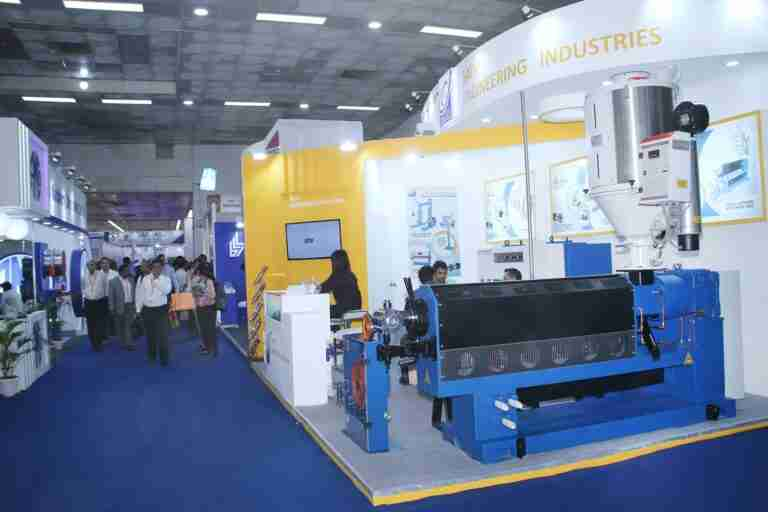
Insulation Extrusion Machine
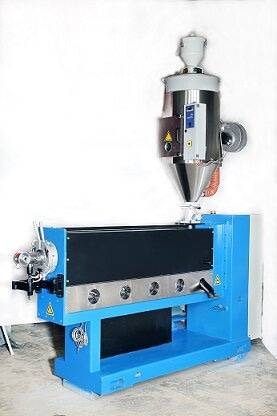
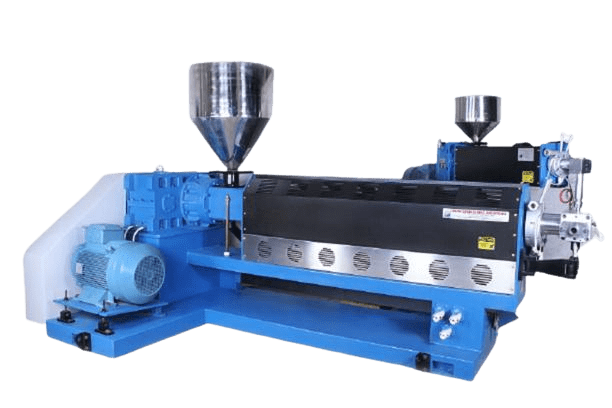
The insulation extrusion machine applies protective insulation around the conductor using materials such as PVC, XLPE, or polyethylene. This is one of the most critical stages in cable manufacturing because insulation protects the conductor from electrical leakage, moisture, heat, and environmental damage.
Advanced extrusion systems provide precise temperature control, uniform insulation thickness, and smooth cable surfaces. These features improve product quality and ensure every cable type complies with international safety standards. High-quality insulation is particularly important in HT cable manufacturing, where electrical performance and reliability are critical.
Understanding HT Cable and LT Cable
Before selecting manufacturing machinery, it is important to understand the difference between high-voltage and low-voltage cables. The HT cable full form is High Tension Cable, while the LT cable full form is Low Tension Cable. Both categories serve different electrical applications and require different manufacturing specifications.
An HT cable is designed for transmitting electricity at higher voltage levels, making it suitable for power plants, substations, industrial facilities, renewable energy projects, and utility networks. In contrast, cables manufactured under the LT cable full form category are generally used for residential buildings, commercial complexes, factories, and internal electrical distribution systems where voltage requirements are comparatively lower.
Why Saini Engineering is the Preferred Choice
When investing in cable manufacturing equipment, selecting the right machine manufacturer is just as important as choosing the right production technology. Saini Engineering has established itself as a trusted name by delivering advanced cable manufacturing machinery designed for high productivity, precision, and long-term reliability. Every machine is engineered using modern technology to meet the evolving requirements of manufacturers producing different types of cable.
With years of engineering expertise, Saini Engineering focuses on innovation, superior quality, robust machine construction, energy efficiency, and customer satisfaction. The company provides customized manufacturing solutions for businesses producing every major cable type, including equipment suitable for HT cable and low-voltage cable production. By combining advanced engineering with dependable after-sales support, Saini Engineering helps manufacturers improve production efficiency, reduce downtime, and achieve consistent product quality in today’s competitive cable manufacturing industry.
Armouring Machine
The Armouring Machine is one of the most important machines in the cable manufacturing process, especially for industrial and underground power cables. It applies a protective layer of galvanized steel wire or steel tape around the insulated cable to provide excellent mechanical strength and protection against external damage. This process is essential for manufacturing heavy-duty types of cable that are installed in harsh industrial environments.
Modern armouring machines operate with high precision and automatic tension control, ensuring uniform wrapping throughout the cable length. Every cable type designed for mining, power distribution, infrastructure, and industrial applications requires accurate armouring to increase durability, improve impact resistance, and extend service life. Advanced automation also helps manufacturers achieve higher production efficiency while maintaining superior product quality.
Inner and Outer Sheathing Machine
After insulation and armouring, cables require an additional protective layer known as the sheath. The sheathing machine applies PVC, PE, or LSZH (Low Smoke Zero Halogen) material around the cable to protect it from moisture, chemicals, sunlight, abrasion, and environmental conditions. This process significantly improves the cable’s overall durability and operational reliability.
Modern sheathing machines are equipped with advanced extrusion technology that ensures smooth surface finish, consistent thickness, and excellent adhesion between the sheath and the conductor assembly. Whether manufacturing residential wires or industrial HT cable, high-quality sheathing is essential for maintaining electrical safety and extending product life. Every cable type produced for outdoor installations benefits from this additional protective layer.
Cable Cooling System
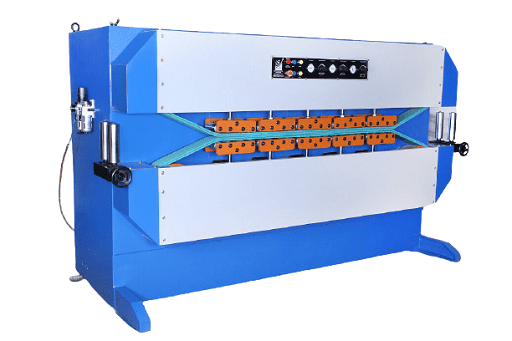
Immediately after the insulation or sheathing process, cables pass through a cooling system that stabilizes the insulation material before winding. Proper cooling prevents deformation, maintains dimensional accuracy, and improves the physical properties of the finished cable. It also ensures that every cable type meets strict quality standards before moving to the next production stage.
Advanced cooling systems utilize water troughs, air cooling, and automatic temperature monitoring to optimize production efficiency. Consistent cooling improves the cable’s appearance, dimensional stability, and long-term performance. This stage is particularly important in manufacturing premium HT cable, where insulation integrity directly affects electrical reliability.
Spark Testing Machine
Electrical safety is one of the highest priorities in cable manufacturing. A Spark Testing Machine is used to detect pinholes, cracks, insulation defects, or weak points that may compromise cable performance. This machine performs non-destructive testing by applying a controlled high voltage across the cable insulation during production.
If any defect exists, the system immediately detects and identifies the faulty section, allowing manufacturers to maintain high product quality. Every manufacturer producing different types of cable relies on spark testing equipment to ensure every finished product complies with national and international electrical safety standards before reaching customers.
Diameter Measuring System
Maintaining accurate cable dimensions is essential for product consistency and compliance with technical specifications. Diameter measuring systems continuously monitor cable thickness throughout the manufacturing process using advanced laser technology. These systems automatically detect any variation and immediately alert machine operators.
Consistent dimensional accuracy is especially important for specialized HT cable, where insulation thickness and conductor dimensions directly influence electrical performance. Automated measuring systems help manufacturers improve quality control while reducing material wastage during the production of every cable type.
Automatic Cable Coiling and Packaging Machine
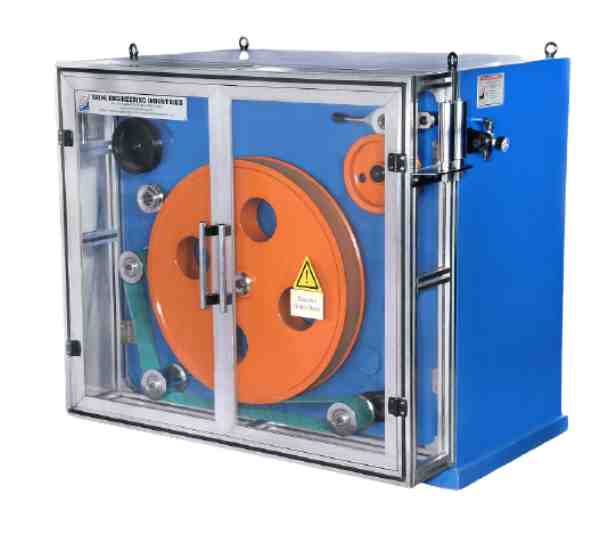
The final stage of cable production involves coiling, cutting, winding, and packaging the finished product. Automatic cable coiling machines ensure cables are wound neatly into coils or drums according to customer specifications. Automated packaging also improves product handling, transportation, and storage efficiency.
Modern packaging systems integrate length measurement, automatic labeling, barcode printing, and wrapping technology to increase production speed. These machines support manufacturers producing various types of cable by delivering consistent packaging quality while minimizing manual labor and operational costs.
Complete Power Cable Manufacturing Line
A modern cable manufacturing facility consists of multiple interconnected machines operating as a fully automated production line. From raw material feeding to final packaging, every process is synchronized to maximize efficiency and maintain consistent product quality. A complete production line enables manufacturers to produce different cable type products with minimal human intervention.
Integrated cable production lines reduce production time, improve accuracy, optimize material utilization, and enhance operational productivity. Whether manufacturing building wires, industrial cables, control cables, or HT cable, automated production systems provide greater flexibility while maintaining high manufacturing standards across all types of cable.
Difference Between HT Cable and LT Cable Manufacturing
Understanding the manufacturing differences between high-voltage and low-voltage cables is essential before selecting machinery. The HT cable full form is High Tension Cable, while the LT cable full form is Low Tension Cable. Although both are electrical power cables, their production processes involve different materials, insulation systems, and testing requirements.
Manufacturing HT cable requires advanced insulation extrusion, precise conductor processing, multiple shielding layers, and high-voltage testing equipment. In contrast, cables falling under the LT cable full form category generally require comparatively simpler manufacturing processes while still maintaining excellent electrical safety and performance. Choosing the correct production equipment ensures every cable type meets its intended application requirements.
Key Features of Modern Cable Manufacturing Machines
Modern cable manufacturing machinery is designed to deliver maximum productivity while ensuring excellent product quality. Automation, intelligent control systems, energy-efficient motors, digital monitoring, and precision engineering have significantly improved manufacturing performance over traditional production methods.
Today’s machines also include PLC-based control panels, touch-screen interfaces, automatic fault detection, remote monitoring capabilities, and integrated quality inspection systems. These advanced technologies allow manufacturers producing different types of cable to increase production capacity while maintaining consistent quality across every cable type.
Industries Served by Power Cable Machines
Power cable manufacturing machines support a wide range of industries that require reliable electrical cables for different applications. Residential construction, commercial buildings, manufacturing plants, renewable energy projects, power transmission, oil and gas facilities, railway infrastructure, airports, marine industries, and telecommunications all depend on high-quality cable production.
As industrialization continues expanding worldwide, the demand for advanced machinery capable of producing premium HT cable and low-voltage electrical cables continues to increase. Manufacturers investing in modern equipment are better positioned to meet growing customer expectations while maintaining superior product quality.
Why Saini Engineering Leads in Cable Machine Manufacturing
Choosing the right machinery manufacturer directly impacts production quality, operational efficiency, and long-term business growth. Saini Engineering has become a trusted engineering company by designing and manufacturing advanced cable production machinery that combines innovation, durability, and precision engineering. Every machine is developed to support manufacturers producing various types of cable with maximum productivity and consistent quality.
At Saini Engineering, engineering excellence is driven by modern technology, skilled professionals, premium components, and strict quality standards. The company understands the evolving needs of the cable manufacturing industry and delivers customized solutions suitable for residential wires, industrial cables, communication cables, and HT cable production lines.
Every machine manufactured by Saini Engineering undergoes comprehensive quality inspection before delivery, ensuring reliable performance and long operational life. The company’s commitment to customer satisfaction extends beyond installation by providing technical guidance, operator training, maintenance support, and prompt after-sales service. This customer-focused approach has helped Saini Engineering establish long-term partnerships with businesses seeking reliable cable manufacturing solutions.
How to Choose the Right Power Cable Machine
Selecting the right Power Cable Machine is one of the most important decisions for any cable manufacturing company. The machine you choose directly affects production capacity, product quality, operational costs, and long-term profitability. Before investing in equipment, manufacturers should evaluate production requirements, raw materials, automation level, energy consumption, maintenance needs, and future expansion plans. Every cable type requires specific machinery, so understanding production objectives is essential.
Businesses should also consider machine durability, production speed, precision, and after-sales technical support. Investing in modern equipment allows manufacturers to produce different types of cable with greater efficiency while maintaining international quality standards. Choosing a reliable machine manufacturer ensures long-term operational stability and higher returns on investment.
Advantages of Automated Cable Manufacturing Machines
Automation has completely transformed the cable manufacturing industry. Modern machines perform multiple production processes with minimal human intervention, resulting in higher productivity, lower operational costs, and improved product consistency. Automated systems also reduce raw material wastage while maintaining accurate production parameters for every cable type manufactured.
Advanced cable production lines feature PLC control systems, touch-screen interfaces, servo-driven technology, and intelligent monitoring software that optimize manufacturing performance. Whether producing residential wires or premium HT cable, automation enables manufacturers to increase production capacity while maintaining consistent quality throughout the manufacturing process.
Maintenance Tips for Power Cable Machines
Regular maintenance plays a crucial role in ensuring reliable machine performance and extending equipment life. Proper lubrication, routine inspection, timely replacement of worn components, electrical system checks, and cleaning of production equipment help minimize downtime and improve manufacturing efficiency. Preventive maintenance also reduces unexpected production interruptions.
Manufacturers producing various types of cable should establish scheduled maintenance programs for every machine in the production line. Regular calibration of extrusion equipment, stranding machines, testing systems, and winding machines ensures that each cable type maintains the required quality, dimensional accuracy, and electrical performance throughout production.
Applications of Power Cable Manufacturing Machines
Power Cable Machines are widely used across numerous industries where electrical cables are manufactured for power transmission and distribution. Residential construction companies require building wires, while industrial facilities demand heavy-duty power cables capable of operating under challenging environmental conditions. Every application depends on specialized machinery designed for specific types of cable.
These machines also support renewable energy projects, metro rail systems, power plants, substations, telecommunications, marine industries, airports, automotive manufacturing, mining operations, and infrastructure development. Advanced machinery enables manufacturers to produce premium HT cable and low-voltage electrical cables that comply with international quality and safety standards.
Future of the Cable Manufacturing Industry
The future of the cable manufacturing industry is driven by automation, artificial intelligence, Industry 4.0, and sustainable manufacturing technologies. Modern factories are increasingly adopting smart production systems capable of monitoring machine performance, reducing energy consumption, and improving production efficiency through real-time data analysis. These innovations are reshaping how every cable type is manufactured.
Growing investments in renewable energy, electric vehicles, smart cities, industrial automation, and global infrastructure projects continue to increase demand for advanced cable manufacturing equipment. As industries require more sophisticated types of cable, manufacturers are investing in intelligent production lines capable of producing high-performance electrical cables with exceptional consistency and reliability.
Why Saini Engineering is the Ideal Partner for Cable Machine Manufacturing
Companies that invest in cable manufacturing machinery not only need the machinery but also an engineering company that would provide innovative solutions and technical assistance. Saini Engineering has built its reputation as a trustworthy manufacturer of high-end Power Cable Machines using its experience and latest technology. The machines provided by Saini Engineering help companies produce premium types of cables and increase their productivity.
All machines produced by Saini Engineering are made on precision engineering principles, using high-quality raw materials and quality assurance methods. All machines include wire drawing, stranding, extruding, armouring, sheathing, testing, and packaging of all types of cables. In this way, customers can set up efficient production facilities with dependable machines.
Innovation is one of the main principles of the Saini Engineering manufacture. The machines are constantly improved through the implementation of intelligent automation, energy-efficient technology, digital monitoring technology, and user-friendly control methods. This way, customers can save on production expenses and improve the quality of the manufacturing process.
Another key strength of Saini Engineering is customer satisfaction. The firm offers complete project management which involves the installation of machines, training operators, technical advice, preventive maintenance, and availability of spare parts in addition to timely after sales service. Such a level of commitment by the firm guarantees that its customers enjoy optimal production and minimal machine downtime.
Saini Engineering makes customized solutions for all types of cables, whether it is building wires, power cables, communication cables, control cables, renewable energy cables, or HT cables. Due to its focus on engineering excellence and quality production, it has become an ideal choice for firms seeking to develop their cable manufacturing plants.
Why HT and LT Cable Production Requires Specialized Machinery
Many people entering the cable manufacturing industry often ask about the HT cable full form and the LT cable full form because these products require different production technologies. The HT cable full form is High Tension Cable, designed to transmit electricity at high voltage levels for utilities, substations, heavy industries, and large infrastructure projects.
The LT cable full form is Low Tension Cable, commonly used for residential buildings, commercial complexes, factories, hospitals, schools, and internal electrical distribution systems. Since both cable categories have different voltage ratings and insulation requirements, manufacturers need specialized production equipment capable of maintaining precise quality standards for each cable type.
Final Thoughts
There is no stopping the rising need for dependable electrical systems around the world, making the latest generation of Power Cable Machines an inevitable acquisition for contemporary cable manufacturing companies. From wire drawing and stranding to insulation extrusion, armor and sheath, testing, and packaging, each step in the manufacturing process demands state-of-the-art machinery that delivers top-class types of cables. Investing in the correct machines will result in increased productivity, consistency, safety, and future success.
All types of cables, from HT cables to low-voltage power cables, require manufacturers to make investments in automation, quality management, and energy-efficient manufacturing processes. It is just as important to know the full forms of the HT cable and the LT cable, since each needs a different manufacturing process to deliver good electrical results.
Those business enterprises that wish to set up a cable manufacturing factory can rely on Saini Engineering for engineering services and machinery that are suited to current industrial requirements. Committed to innovations, precision engineering, highest quality products, and unmatched customer support, Saini Engineering is assisting its customers in attaining higher levels of efficiency and cost reduction with world-class manufacturing standards. Businesses that choose suitable machinery in association with a reliable engineering firm are sure to manufacture the best electrical cables for industries all across the globe.
Frequently Asked Questions
What is a Power Cable Machine?
A Power Cable Machine is specialized industrial equipment used to manufacture electrical power cables through processes such as wire drawing, stranding, insulation extrusion, armouring, sheathing, testing, and packaging. Different machines are used depending on the required cable type.
What are the main types of cable manufactured using these machines?
Modern cable production lines manufacture various types of cable, including house wires, power cables, control cables, instrumentation cables, communication cables, solar cables, automotive cables, and HT cable for industrial and utility applications.
What is the HT cable full form?
The HT cable full form is High Tension Cable. These cables are designed to transmit electricity at high voltage levels and are commonly used in substations, power plants, heavy industries, and electrical transmission networks.
What is the LT cable full form?
The LT cable full form is Low Tension Cable. These cables are primarily used in residential, commercial, and industrial electrical distribution systems where lower voltage transmission is required.
Why choose Saini Engineering?
Saini Engineering is a trusted manufacturer of advanced cable manufacturing machinery, offering complete production solutions, customized machine designs, modern automation, excellent build quality, and reliable after-sales support. The company is committed to helping cable manufacturers produce high-quality products efficiently while achieving long-term operational success.