Though electrical wires have a very simple appearance, their manufacture requires precisely controlled engineering operations. While a bare copper or aluminium conductor transmits electric current effectively, it should be insulated properly in order to be used safely. It is for this reason that wire coating becomes the most crucial stage in producing electrical wire.
An ideal conductor should be able to conduct electricity, withstand mechanical loads, retain sufficient flexibility, and have high resistance to temperature changes and insulation properties. Depending on the use of the wire, manufacturers will choose coating material and techniques for its application. Our expertise at Saini Engineering lies in engineering, and we know why it is necessary.
Why Do Electrical Wires Need an Insulating Layer?
In metal conducting materials, the flow of electricity is smooth and simple. However, this characteristic is potentially hazardous when the conductor is exposed. Contact between two exposed conductors leads to a short circuit. On contact with a person, the conductor can lead to an electric shock. The role of insulation is to prevent this hazardous situation by making sure that there exists an isolated layer around the conductor.
A question many wonder about is why are electric wires insulated using plastic material. Simply put, plastics and other forms of polymers used for insulation have properties which allow them to withstand electrical current without weighing much, while being flexible, tough, and cost-effective. This may vary depending on the specific requirement of the insulation. There may be PVC, PE, XLPE, fluoropolymers, or rubber among others.
There is more to it than just safety.
What Is Wire Coating?
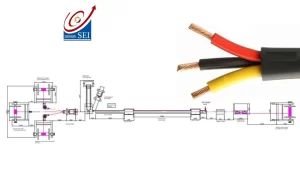
Coated wire is the process of applying an insulating or other covering around a conductive core. Typically, the conductive core of the wire is made of either copper or aluminum, whereas the coating could be selected based on the voltage, heat, flexibility, chemicals, or other requirements.
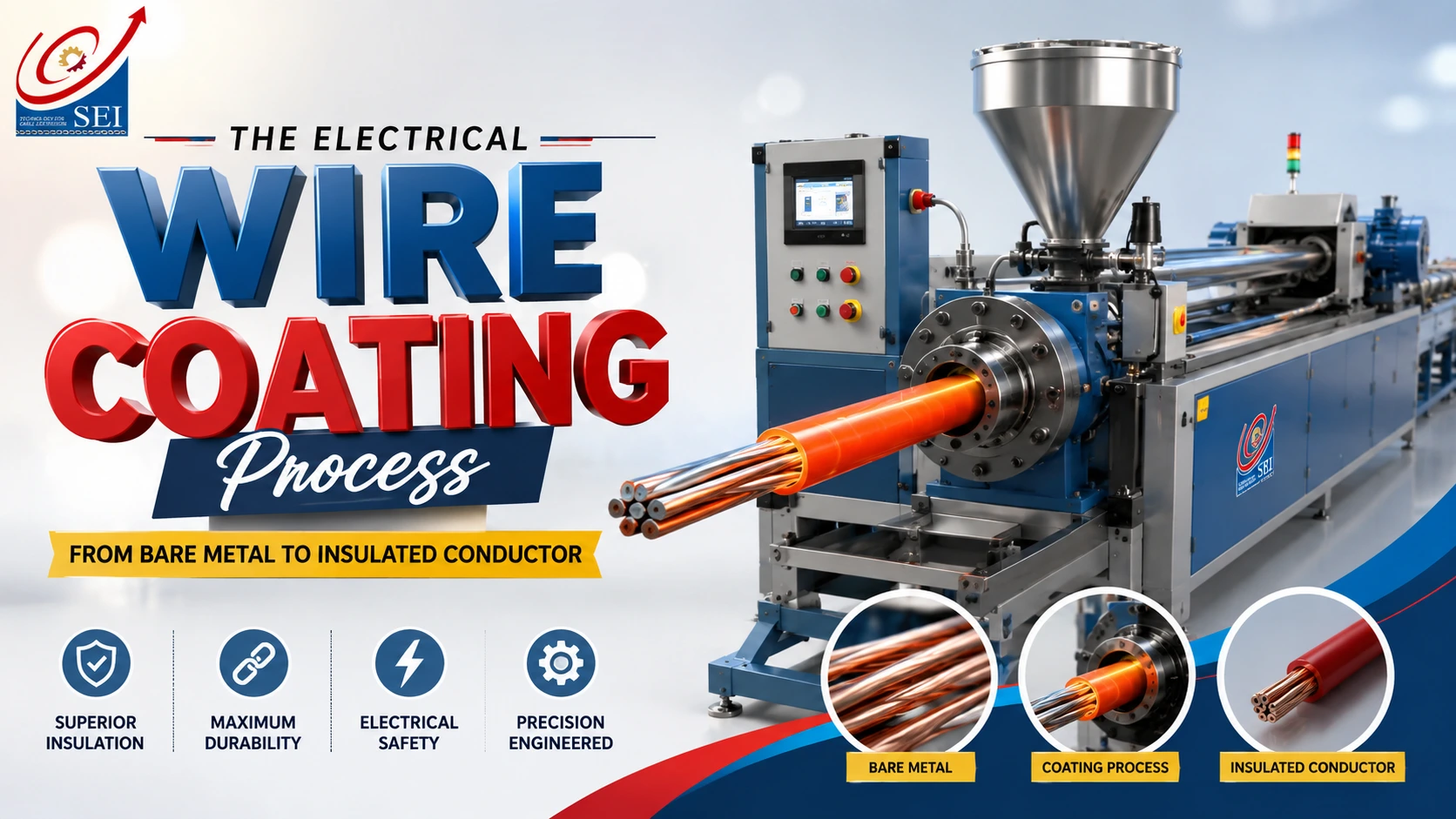
When producing the wire, a core without a coating goes through the coating machine that applies insulation, which is melted, softened, or dissolved in some way onto it. After the coating process, a cooled wire goes through testing and is wound.
It is extremely important to have a uniform thickness of the layer during the coating process. If the layer of insulation is too thin, the electrical insulation could be broken, and if the layer is unnecessary, the wire would become thicker and heavier.
How the Electrical Wire Coating Process Works
1. Conductor Preparation
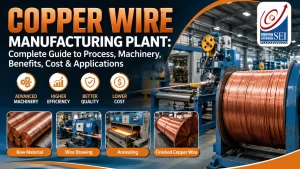
The process begins with high-quality copper or aluminium rod. The material is drawn through dies to achieve the required diameter. Drawing improves dimensional consistency, while annealing may be used to restore flexibility and reduce internal stresses.
Before insulation is applied, the conductor surface must be clean. Oil, dust, oxides, and other contaminants can interfere with adhesion. Cleaning and surface preparation therefore form a critical part of the manufacturing sequence.
2. Material Selection
The insulation material is selected according to the wire’s intended application. PVC is common in general-purpose electrical cables because it offers good insulation, flexibility, and cost efficiency. XLPE is widely used where higher thermal performance is required. Polyethylene and fluoropolymer materials may be selected for specialized applications.
This stage also explains why are electric wires coated with such substances. These materials are chosen because they combine high electrical resistance with practical mechanical and environmental properties.
3. Extrusion or Coating Application
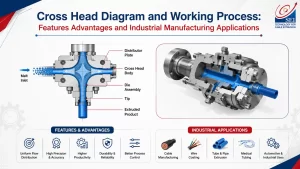
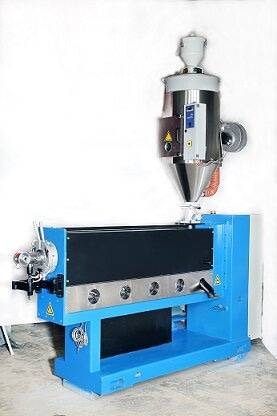
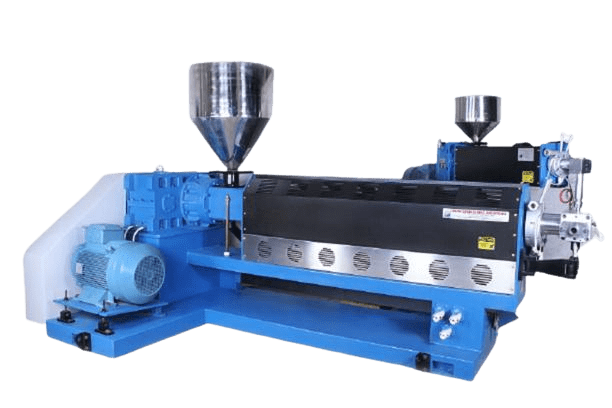
In an extrusion-based process, polymer pellets are fed into an extruder. Heat and mechanical action soften the material, which is then pushed through a specially designed die. The conductor travels through the center of the die while the insulation forms a continuous layer around it.
The speed of the conductor, polymer temperature, pressure, die dimensions, and cooling conditions must be synchronized. Small variations can affect insulation thickness and surface quality.
In fine wires and magnet wires, alternative coating technologies may be used. The conductor can receive multiple thin layers, followed by controlled drying or curing. Multiple passes allow manufacturers to build the required insulation thickness without creating defects.
4. Cooling and Curing
After the insulating material is applied, the wire must be stabilized. Thermoplastic coatings are commonly cooled in water or air. Thermoset or enamel systems may require controlled heating to cure the coating.
Cooling must be uniform. Excessively rapid or uneven cooling can create dimensional changes, surface imperfections, or internal stresses. In enamelled wire production, controlled oven conditions are particularly important because the coating needs to form a stable insulating film.
5. Thickness and Surface Inspection
A reliable production system includes continuous monitoring. Manufacturers may use laser gauges, diameter sensors, spark testers, vision systems, and other inspection technologies.
A spark test can identify pinholes or insulation weaknesses by detecting electrical breakdown through defective areas. Dimensional inspection checks the finished diameter and helps verify whether the insulation thickness remains within specification.
6. Testing and Final Winding
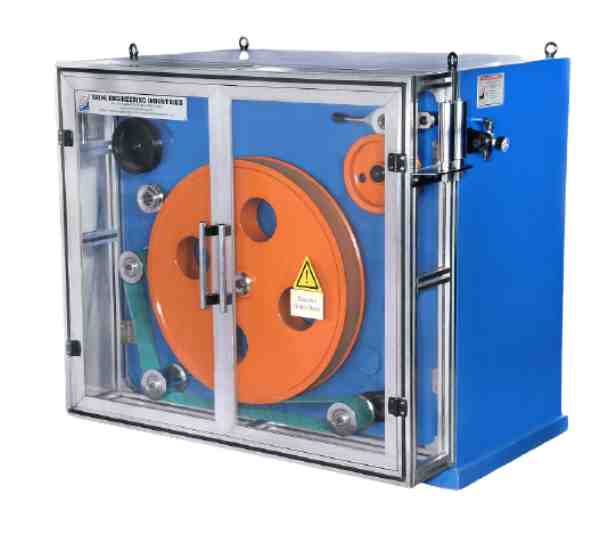
The finished wire is tested for electrical resistance, insulation integrity, dimensions, flexibility, adhesion, and other application-specific requirements. Once it passes inspection, it is wound onto reels or coils for storage, transportation, or further cable manufacturing.
What Makes a Good Coating Wire Process?
A high-quality coating wire process depends on consistency rather than simply applying a thick layer. The coating should adhere properly to the conductor, remain stable under expected temperatures, resist environmental conditions, and maintain insulation properties throughout service.
Important control factors include:
- Conductor diameter and surface cleanliness
- Polymer temperature and viscosity
- Extrusion pressure and die alignment
- Production line speed
- Coating thickness
- Cooling or curing temperature
- Surface appearance
- Spark-test performance
- Adhesion and flexibility
- Final dimensional accuracy
Why Are Electric Wires Covered with Plastic?
“Why Are Electric Wires Covered with Plastic?” is an interesting and pertinent question considering everyday electrical safety issues. Plastic polymers are characterized by significant electrical resistance, which helps stop any electricity leakage from the conductor inside. Moreover, this material is relatively light in weight and is produced in flexible forms.
But not every type of electrical wire has standard plastic insulation. This depends directly on the conditions in which it will be used. Household wire usually has a PVC insulation, while for various industrial and high temperatures purposes or automobile applications, special compounds are used.
Thus, any type of wire should never be judged by its appearance alone.”
Working Process of Electrical Wire Coating
- Conductor Preparation – Copper or aluminium wire is cleaned, drawn, and prepared to achieve the required diameter and surface quality.
- Material Feeding – The selected insulating material, such as PVC, XLPE, PE, rubber, or other polymer, is fed into the extrusion system.
- Heating & Melting – The coating material is heated to the required temperature until it reaches the correct molten or workable condition.
- Extrusion & Coating – The bare conductor passes through a precision die while the molten insulation is applied evenly around the wire.
- Thickness Control – Coating thickness is continuously monitored to meet the required electrical and mechanical specifications.
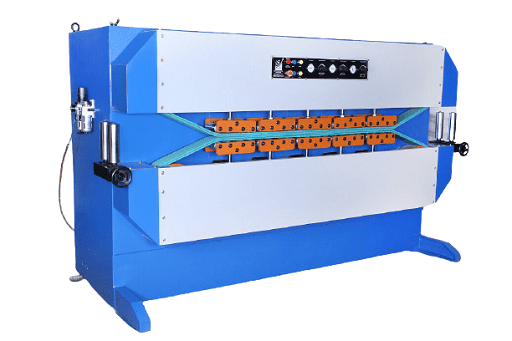
- Cooling – The freshly coated wire passes through a controlled cooling system, usually involving water or air, to solidify the insulation.
Why Are Electric Wires Coated with Such Substances?
People often ask why are electric wires coated with such substances instead of leaving the metal exposed. The answer combines safety and performance. The coating prevents unintended electrical contact, reduces the chance of short circuits, and protects the conductor from environmental damage.
A suitable insulating layer can also improve handling during installation. It helps installers route wires through electrical systems without direct contact with the conductive metal. In industrial settings, specialized coatings may provide resistance to oils, solvents, heat, moisture, UV exposure, and mechanical wear.
The coating therefore becomes an engineered part of the electrical conductor rather than a decorative outer layer.
Why Electrical Wires Have a Coating of an Insulating Material
The phrase electrical wires have a coating of an insulating material describes one of the basic principles of electrical engineering. The conductor carries electrical energy, while the insulation controls where that energy can travel.
When electrical wires have a coating of an insulating material, the conductive core is separated from other conductors, equipment surfaces, and people. This separation reduces accidental current paths and supports safer electrical installations.
In practical manufacturing, electrical wires have a coating of an insulating material that must meet defined thickness, dielectric, thermal, and mechanical requirements. A defect that looks tiny can become significant at higher voltage or under demanding operating conditions.
Benefits of a Proper Electrical Wire Coating
A properly designed coating provides several important benefits:
- Electrical safety: It reduces the risk of electric shock and unintended contact.
- Short-circuit prevention: It keeps adjacent conductors electrically separated.
- Environmental protection: It shields the conductor from moisture and contaminants.
- Mechanical durability: It helps resist abrasion, bending, and handling damage.
- Thermal stability: Suitable materials can operate across defined temperature ranges.
- Longer service life: Protection slows corrosion and environmental degradation.
- Installation convenience: Flexible insulation makes routing and handling easier.
- Reliable performance: Uniform insulation supports consistent electrical characteristics.
Common Coating Materials
PVC
PVC is cost-effective, versatile, and widely used in building and general-purpose cables.
XLPE
XLPE offers strong thermal performance and is common in power transmission and distribution applications.
Polyethylene
Polyethylene provides good electrical properties and is used in several cable designs.
Fluoropolymers
Fluoropolymers are suitable for demanding environments requiring excellent temperature and chemical resistance.
Rubber-Based Compounds
Rubber-based insulation is used where flexibility and mechanical resilience are important.
Enamel Coatings
Enamel coatings are common for magnet wire used in motors, transformers, generators, and coils, where a thin insulating film is required.
Common Defects in Wire Coating
Even a sophisticated production line can produce defects if process parameters are not controlled. Typical problems include pinholes, uneven thickness, bubbles, surface roughness, poor adhesion, cracks, discoloration, and dimensional variation.
Possible causes include contaminated conductors, incorrect polymer temperature, worn dies, unstable line speed, poor cooling, moisture in the insulation material, or incorrect curing conditions.
Effective quality control identifies these problems early instead of allowing defective wire to reach the final assembly stage.
How Saini Engineering Supports Better Manufacturing
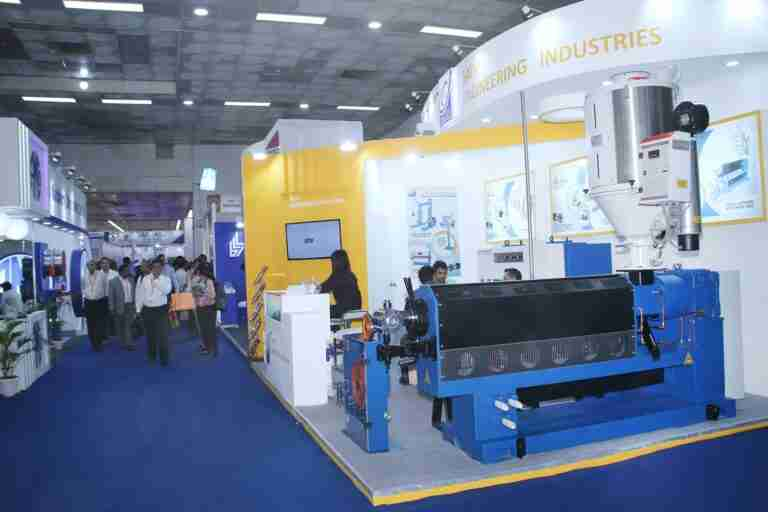
Saini Engineering emphasizes engineering-focused solutions that can support reliable production environments. In electrical wire manufacturing, equipment selection should consider conductor size, coating material, production speed, temperature control, inspection requirements, and future production capacity.
A well-designed line can help manufacturers maintain repeatable quality while reducing material waste and production interruptions. Automation can further improve monitoring by tracking process conditions and identifying deviations quickly.
The Future of Electrical Wire Coating
Electrical systems are becoming more compact, efficient, and demanding. This trend is encouraging manufacturers to develop thinner insulation systems, higher-temperature materials, improved monitoring, and more precise coating technologies.
Modern production lines increasingly combine sensors, automated controls, online diameter measurement, defect detection, and data logging. These technologies make it possible to maintain tighter process tolerances while improving productivity.
Sustainability is also becoming important. Manufacturers are exploring recyclable materials, reduced material consumption, longer-lasting insulation, and production systems that minimize waste.
Electrical Wire Coating Specification Table
| Specification | Typical Consideration |
|---|---|
| Conductor Material | Copper / Aluminium |
| Conductor Diameter | Application dependent |
| Insulation Material | PVC / XLPE / PE / Rubber / Fluoropolymer / Enamel |
| Coating Method | Extrusion / Enamelling / Multi-layer coating |
| Coating Thickness | Based on voltage and application |
| Line Speed | Selected according to wire size and material |
| Operating Temperature | Depends on insulation material |
| Cooling Method | Water cooling / Air cooling |
| Curing Method | Thermal curing where required |
| Surface Inspection | Visual / Vision inspection |
| Diameter Measurement | Online laser or dimensional gauges |
| Insulation Testing | Spark testing / Dielectric testing |
| Adhesion Testing | Application dependent |
| Flexibility Testing | Based on cable requirements |
| Electrical Testing | Resistance / Insulation integrity |
| Final Product Form | Coil / Reel |
| Quality Control | Online and offline inspection |
| Application Areas | Power, electronics, automotive, industrial, appliances |
| Material Compatibility | Must match conductor and application |
| Production Priority | Uniformity, safety, reliability, efficiency |
Frequently Asked Questions
1. Why are electric wires covered with plastic?
The main reason why are electric wires covered with plastic is electrical isolation. Suitable polymers prevent unintended current flow, protect users, and separate adjacent conductors.
2. What does coating wire mean?
Coating wire means placing an insulating layer around a conductor. A precise process improves dimensional consistency and helps maintain reliable insulation.
3. Why are electric wires coated with such substances?
The question of why are electric wires coated with such substances is answered by the need for electrical separation, environmental protection, flexibility, and longer service life.
4. Why do electrical wires have a coating of an insulating material?
Electrical wires have a coating of an insulating material to separate the conductor from its surroundings. The material is selected according to voltage, temperature, flexibility, and environmental requirements.
5. Is wire coating only used for safety?
No. Wire coating also supports mechanical protection, chemical resistance, heat resistance, flexibility, and long-term reliability.
6. How is coating wire thickness controlled?
A controlled coating wire process can use precision dies, online diameter gauges, line-speed control, and continuous inspection to maintain the required thickness.
7. Why are electric wires covered with plastic instead of leaving the conductor exposed?
Suitable polymers provide high electrical resistance, flexibility, low weight, and practical manufacturing characteristics. This is why plastic is widely used for insulation.
8. Why are electric wires coated with such substances in industrial applications?
The insulation can protect conductors against heat, oil, chemicals, moisture, abrasion, and mechanical stress, depending on the selected material.
9. How does insulation improve electrical performance?
Electrical wires have a coating of an insulating material that limits leakage and maintains separation between conductive paths. The insulation must remain stable under expected operating conditions.
10. What should manufacturers consider before selecting a coating system?
Manufacturers should evaluate conductor size, material compatibility, operating voltage, temperature, production speed, coating thickness, cooling or curing requirements, inspection methods, and expected service environment.
11. What is the role of wire coating equipment?
Wire coating equipment controls the application of insulation around the conductor. A reliable setup helps achieve uniform coverage, stable dimensions, and repeatable production quality.
12. Can coating wire materials vary by application?
Yes. A coating wire material may be PVC, XLPE, polyethylene, fluoropolymer, rubber compound, or enamel depending on the required electrical, thermal, and mechanical properties.
13. Why are electric wires covered with plastic in household cables?
Suitable plastic insulation provides electrical separation while remaining practical for installation, handling, bending, and everyday electrical use.
14. Why are electric wires coated with such substances when the conductor already carries current?
The conductor carries current, while the insulation prevents that current from reaching unintended surfaces or adjacent conductors. This separation is essential for safe operation.
15. What does electrical wires have a coating of an insulating material mean for quality control?
In manufacturing terms, it means the insulation must meet specified thickness, dielectric, mechanical, and environmental requirements. Inspection confirms that the finished product meets its intended quality standard.
Conclusion
The coating process of changing a bare copper or aluminium conductor into the completed wire has many aspects of the engineering process which are more complicated than it seems at first glance. Insulation of a wire is used to improve the performance of wires, increase safety, and ensure longevity of the product.
Knowing why are electrical wires wrapped with plastic will give the answers for the necessity of the material used for the coating of these wires. As for why are electrical wires coated with a specific substance, it will be explained by the ability of such a coating to isolate and provide longevity.
For the manufacturer, the task is not just to coat the wires but to manufacture high-quality electrical wires in a consistent way. Using special processes and equipment, it is possible to manufacture consistent results.
Thus, why electrical wires have such coating is the question of the fact that it is necessary for the isolation of electrical energy.