Introduction to Copper Wire Manufacturing Plant
The increasing requirement of cables, power transmission lines, automobile wiring, renewable energy systems, and electrical equipment used in industries has created a greater need for premium-grade copper wires. The Copper Wire Manufacturing Plant has great significance in manufacturing superior copper wires that meet the quality standards both at the national and international levels. The modern manufacturing plant uses sophisticated machines along with automatic production lines to provide superior conductivity, dimensional accuracy, and service life of the product.
For businesses that wish to manufacture wires, choosing the appropriate production line is one of the most important things. The manufacturing plant increases the efficiency in production, reduces wastage of materials, lowers the cost of operations, and ensures consistency in product quality. Saini Engineering is well known in the manufacturing of automatic copper wire production machines that provide maximum efficiency through innovative technology and durability of the machines.
Understanding a Copper Wire Manufacturing Plant
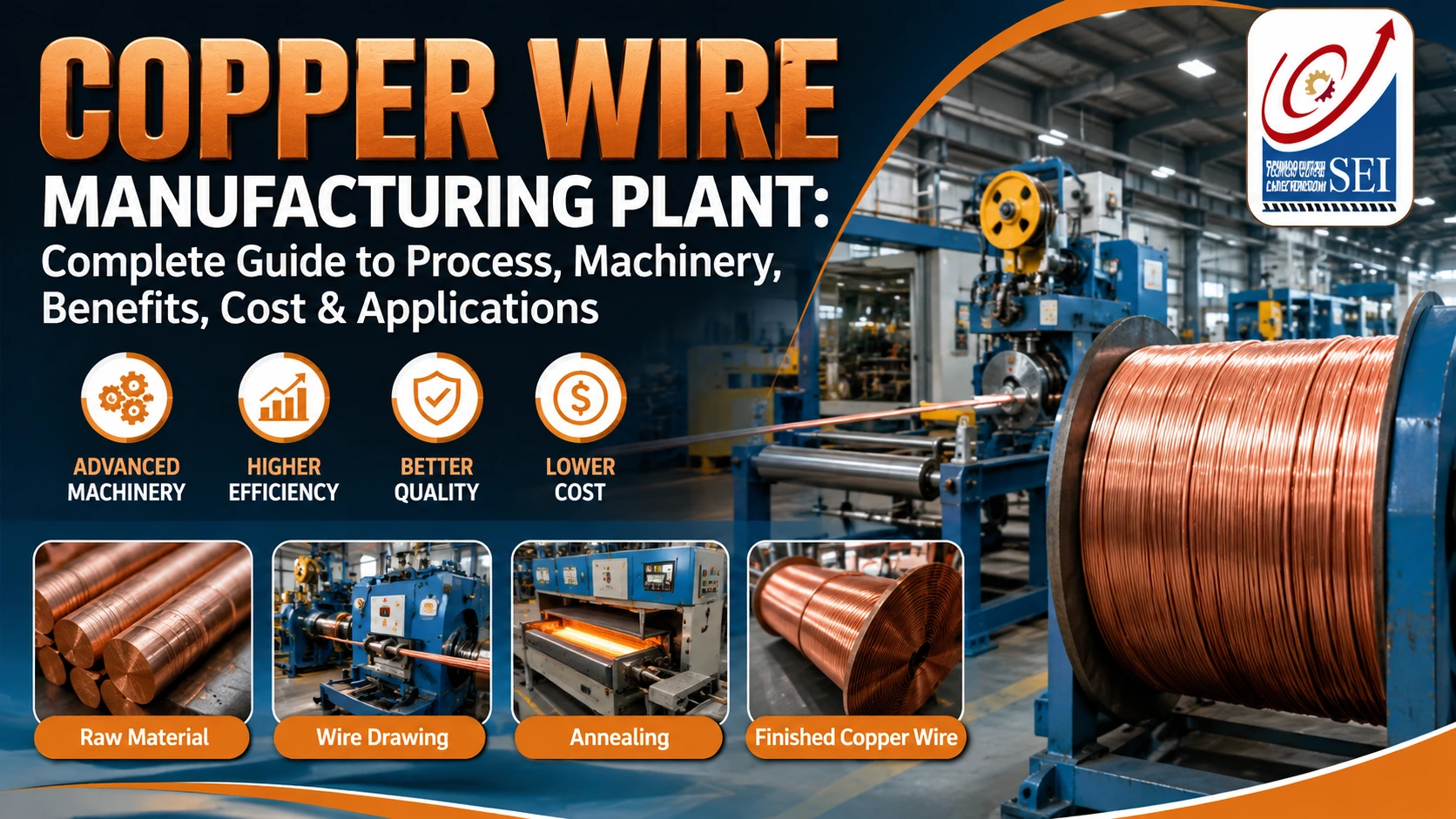
A copper wire manufacturing plant is a well-designed manufacturing unit that transforms high-quality copper rods into copper wires of various diameters and requirements. Several steps are involved in the process of manufacturing that include preparing rods, drawing wire, annealing, cooling, cleaning, inspection, and finally winding.
Modern manufacturing units use automatic systems that cut down the level of manual operation and ensure a faster production process. If any of the following applications of copper wires are needed, like electric cables, building wires, automobile wiring, transformers, or industrial wires, a well-designed production line will assure better output.
Growing Demand for Copper Wire Manufacturing
There has been an explosive growth in electrical systems, smart cities, renewable energy initiatives, production of electric vehicles, and industrial automation that have resulted in a high demand for copper wire. Considering the fact that copper possesses good conductivity, anti-corrosive properties, flexibility, and longevity, it continues to be the most sought-after material in electrical and electronic applications around the globe.
As more and more industries are investing in advanced electrical systems, there is an increased tendency among entrepreneurs to start a business by setting up a Copper Wire Manufacturing Plant. Apart from learning about machinery, some of the topics that businesspeople often explore include cost of a copper wire manufacturing plant, cost of an electric wire manufacturing plant, and cost of an electric wire manufacturing plant in India.
Complete Manufacturing Process of Copper Wire
Copper wire manufacturing starts with the use of pure copper rods that form the main raw material. The rods are drawn using a wire drawing machine where different dies are used to decrease the diameter of the rods without losing their strength and dimensionality. The process of drawing must be lubricated and carried out at a controlled speed to obtain a polished surface and ensure die durability.
Afterwards, the drawn wire is annealed to enhance its flexibility, ductility, and conductivity. It is then cooled, cleaned, inspected, and coiled based on the requirements of customers.
Raw Materials Required
The quality of the end product is very much dependent on the purity of the raw materials used in the manufacturing process. The choice between oxygen-free copper rods or ETP copper rods is always preferred since it offers high conductivity and better mechanical strength. Premium-quality raw materials also help to lower the rejection rate in the manufacturing process.
Alongside the copper rods, manufacturers also need lubricating fluids, cooling fluids, gases for annealing where necessary, packaging materials, testing materials, and protective coatings based on the requirements of the customer. Proper storage of the raw materials also helps to avoid contamination and oxidation.
Machinery Used in a Copper Wire Manufacturing Plant
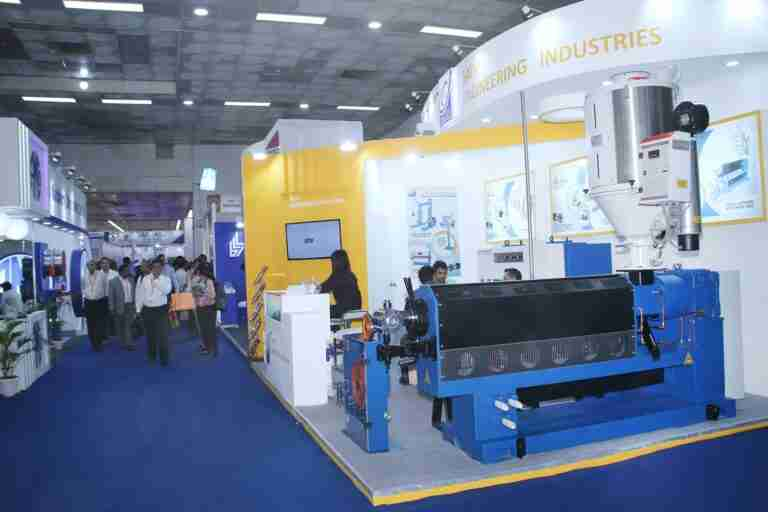
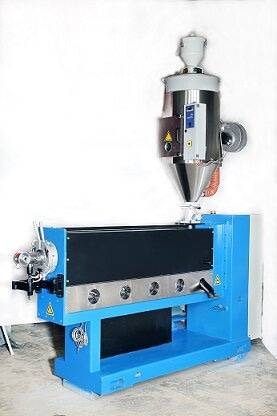
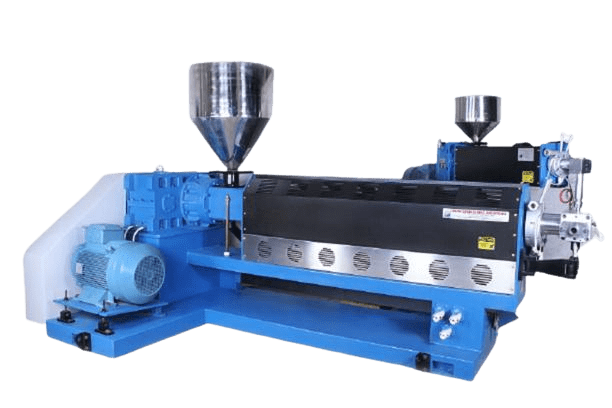
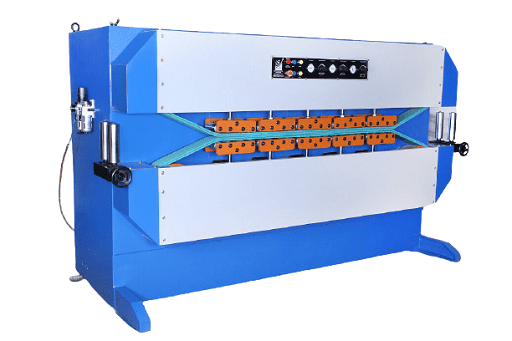
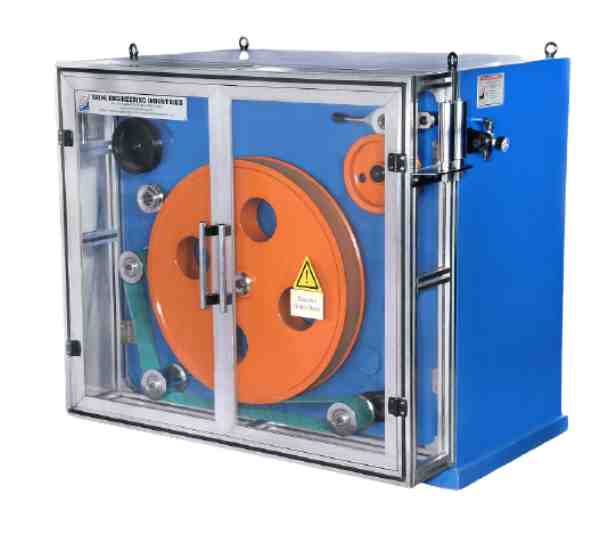
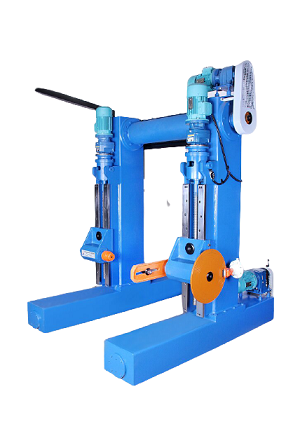
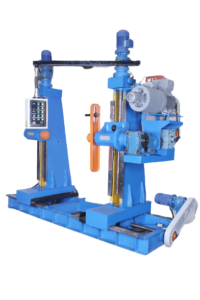
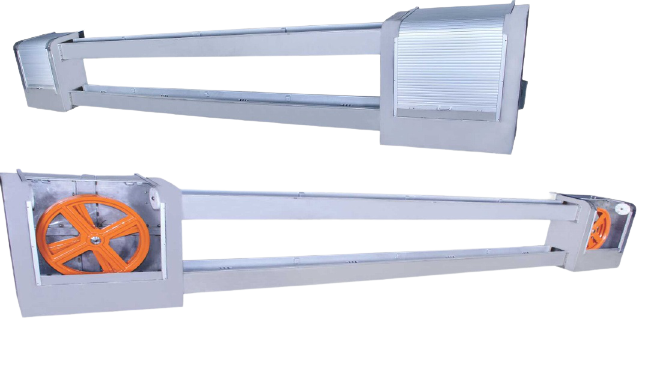
A complete Copper Wire Manufacturing Plant consists of several specialized machines working together to achieve high production efficiency. Every machine performs a dedicated function that contributes to overall product quality and manufacturing accuracy.
Some of the essential machines include:
- Copper Rod Pay-Off Machine
- Multi Wire Drawing Machine
- Fine Wire Drawing Machine
- Intermediate Wire Drawing Machine
- Continuous Annealing Machine
- Wire Cleaning Unit
- Cooling System
- Wire Accumulator
- Automatic Wire Spooling Machine
- Coil Winding Machine
- Quality Testing Equipment
- Packaging System
Saini Engineering designs and manufactures advanced machinery with precision engineering, energy-efficient operation, heavy-duty construction, and automation features that help industries maximize production while minimizing maintenance requirements.
Wire Drawing Process Explained
Wire drawing is the heart of every Copper Wire Manufacturing Plant. During this process, thick copper rods pass through a series of tungsten carbide or diamond dies. Each die gradually reduces the wire diameter while maintaining strength, roundness, and surface quality. Controlled reduction prevents cracks and improves overall wire consistency.
Modern drawing machines use variable speed drives, automatic lubrication systems, digital monitoring, and high-performance cooling arrangements. These technologies improve productivity, extend machine life, reduce energy consumption, and maintain dimensional precision even during continuous high-speed manufacturing.
Importance of Annealing
After wire drawing, copper becomes harder due to work hardening. Annealing restores flexibility and electrical conductivity by heating the wire under controlled conditions before cooling it carefully. This process makes the finished wire easier to bend, install, and use in various electrical applications.
Proper annealing also improves mechanical properties, reduces internal stress, and enhances product reliability. Automated annealing systems ensure uniform temperature control, resulting in consistent wire quality across the entire production batch.
Quality Control During Manufacturing
Quality assurance is an essential part of every Copper Wire Manufacturing Plant. Manufacturers conduct various inspections throughout production to verify wire diameter, tensile strength, conductivity, elongation, surface finish, and dimensional accuracy before dispatching finished products.
Advanced testing equipment helps identify defects at an early stage, reducing rejection rates and maintaining customer satisfaction. Automated monitoring systems also ensure compliance with industry standards while improving production efficiency and minimizing operational losses.
Features of a Modern Copper Wire Manufacturing Plant
Today’s manufacturing plants incorporate advanced technologies that significantly improve productivity, safety, and operational reliability. Automation allows manufacturers to achieve consistent production with reduced labor dependency while maintaining superior product quality.
Key features include:
- Fully automatic operation
- High-speed wire drawing
- Energy-efficient motors
- PLC-based control systems
- User-friendly interface
- Heavy-duty construction
- Low maintenance design
- High production capacity
- Continuous operation capability
- Precision engineering
- Superior wire finish
- Reduced material wastage
Benefits of Investing in a Copper Wire Manufacturing Plant
Establishing a modern manufacturing unit provides long-term commercial advantages for industries involved in electrical component production. Automation improves operational efficiency while reducing production costs and increasing overall profitability.
Major benefits include:
- Higher production output
- Better product consistency
- Reduced manpower requirement
- Lower operating costs
- Excellent return on investment
- Faster production cycles
- Enhanced product quality
- Improved customer satisfaction
- Long machine life
- Minimal downtime
Industrial Applications
Copper wire is one of the most widely used industrial materials because of its exceptional electrical conductivity and mechanical strength. A modern Copper Wire Manufacturing Plant supports numerous industries by producing wires suitable for different applications and technical requirements.
Major industries include:
- Electrical Cable Manufacturing
- Building Wiring
- Power Transmission
- Automotive Industry
- Transformer Manufacturing
- Renewable Energy Projects
- Electronics Industry
- Telecommunication Sector
- Railway Infrastructure
- Defense Equipment
- Industrial Automation
- Household Appliances
Why Businesses Choose Saini Engineering
Selecting the machinery manufacturer is as critical as choosing the right production technology. Saini Engineering has gained immense fame for its range of highly efficient, high performance, and technologically advanced Copper Wire Manufacturing Plant machinery that addresses all the modern industry needs.
At Saini Engineering, the areas of precision engineering, robust machine construction, energy-efficient designs, custom manufacturing solutions, and reliable after-sales support form the core focus area. Each piece of machinery is designed using state-of-the-art machinery design and manufacturing technologies and quality raw materials to assure high performance and efficient operations. Be it compact production units or industrial plants, Saini Engineering offers you machinery that will help you grow sustainably and profitably.
Copper Wire Beyond Industrial Manufacturing
Many more uses of copper do not belong to the electrical and industrial fields. In recent times, gardening terms like electroculture gardening, electro gardening, and electro culture gardening have attracted much attention from hobbyists who think that the use of copper in some experiments can enhance the growth of plants. Many enthusiasts look for how to use copper wire in garden, find the use of copper in the garden, or even try an electroculture antenna in their small gardening experiments.
Regardless of the popularity of these gardening experiments and ideas, the most valuable feature of copper in terms of industry is still its unparalleled conductivity and strength. This is why high-quality wire manufactured in a Copper Wire Manufacturing Plant is still vital in providing power in houses, industries, infrastructure works, and other technologies of today.
Copper Wire Manufacturing Plant Cost, Investment & Business Opportunities
Setting up of Copper Wire Manufacturing Plant is perhaps one of the most viable industrial ventures as the need for copper wire keeps increasing in various industries including construction, electricity transmission, automobile industry, electronics, renewables, and communication industry. However, before setting up a manufacturing facility, it is important for every entrepreneur to know about the cost of investment, machines to be used, manufacturing capacity, and expenses.
Cost of copper wire manufacturing plant setup happens to be one of the most searched topics by many entrepreneurs who wish to set up manufacturing facilities. Various factors that determine the cost include manufacturing capacity, level of automation, plant size, quality of machines, electric requirements, material handling systems, and expansion plans in the future. Companies also compare the electric wire manufacturing plant cost and electric wire manufacturing plant cost in India.
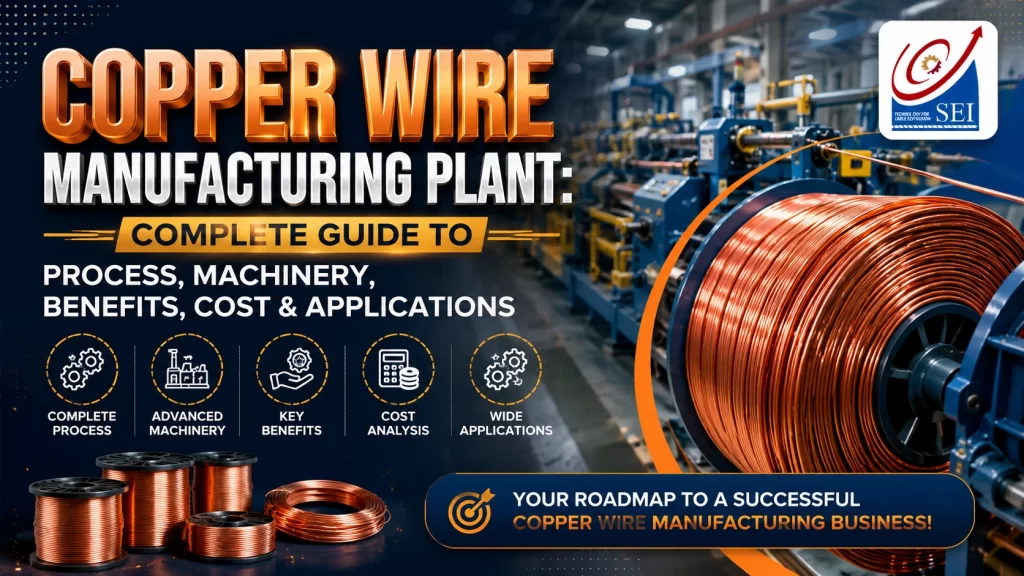
Factors Affecting Copper Wire Manufacturing Plant Cost
The total project cost varies according to production requirements and the level of automation selected by the manufacturer. A fully automatic production line generally requires a higher initial investment but delivers better production efficiency, lower labor costs, reduced material wastage, and consistent product quality over the long term.
Other major cost factors include land availability, factory construction, electrical installation, raw material storage, quality testing equipment, safety systems, packaging units, and maintenance infrastructure. Businesses planning future expansion should also consider additional space for installing high-capacity machinery and automated handling systems.
Machinery Investment and Production Capacity
The machinery installed in a manufacturing plant directly determines production speed, wire quality, and operational efficiency. High-performance equipment ensures consistent output with minimal downtime, making it an essential investment for businesses aiming to serve large-scale industrial customers.
A complete production setup generally includes rod pay-off machines, multi-stage wire drawing machines, continuous annealing systems, cooling units, wire accumulators, automatic spoolers, testing equipment, and packaging systems. Investing in reliable machinery reduces long-term operating expenses while improving production consistency and customer satisfaction.
Plant Layout Planning
A well-planned factory layout improves workflow, minimizes unnecessary material movement, and enhances workplace safety. Proper planning also reduces production delays by ensuring every manufacturing stage follows a logical sequence from raw material entry to finished product dispatch.
Separate areas should be allocated for raw material storage, wire drawing, annealing, cooling, inspection, winding, packaging, quality testing, maintenance, and finished goods storage. An organized layout increases operational efficiency and makes future expansion easier without interrupting production.
Raw Material Storage and Handling
Copper is a premium industrial material that requires proper storage to maintain its quality before processing. Copper rods should be protected from moisture, contamination, dust, and mechanical damage to prevent production defects and material losses during manufacturing.
Modern manufacturing plants use dedicated storage racks, overhead cranes, forklifts, and material handling equipment to move heavy copper rods safely throughout the production line. Efficient handling systems reduce labor effort while increasing production speed and workplace safety.
Importance of Automation
Automation has transformed the modern Copper Wire Manufacturing Plant by improving production speed, reducing manual intervention, and increasing operational accuracy. Advanced control systems monitor every production stage to ensure consistent wire diameter, surface finish, and electrical conductivity.
PLC-controlled machines, digital monitoring systems, automatic lubrication, intelligent cooling arrangements, and variable frequency drives help manufacturers achieve higher productivity while reducing energy consumption. Automation also minimizes human error and improves overall production reliability.
Energy Efficiency in Manufacturing
Energy consumption represents a significant portion of manufacturing costs, making energy-efficient machinery an important investment for every production facility. Modern equipment uses high-efficiency motors and optimized drive systems to reduce electricity usage without affecting production output.
Efficient cooling systems, intelligent machine controls, and optimized production cycles further improve energy savings. Lower power consumption not only reduces operational expenses but also supports environmentally responsible manufacturing practices.
Quality Standards and Inspection
Consistent product quality is essential for building long-term customer trust. Every Copper Wire Manufacturing Plant should implement strict inspection procedures to ensure each batch meets required dimensional and electrical specifications before dispatch.
Testing typically includes wire diameter measurement, tensile strength analysis, conductivity testing, elongation tests, surface finish inspection, and winding quality verification. Advanced digital testing equipment improves inspection accuracy and helps maintain compliance with industrial standards.
Maintenance for Continuous Production
Regular preventive maintenance plays a crucial role in ensuring uninterrupted production and extending machine life. Scheduled inspection of bearings, lubrication systems, drawing dies, motors, belts, cooling arrangements, and electrical components prevents unexpected breakdowns and production losses.
Cleaning machines regularly, replacing worn components on time, and monitoring operating conditions improve machine efficiency while reducing maintenance costs. Proper maintenance also ensures consistent product quality throughout long production cycles.
Workforce and Skill Requirements
Although automation has reduced dependence on manual labor, skilled operators remain essential for efficient plant operation. Experienced technicians monitor production parameters, perform machine adjustments, conduct inspections, and resolve operational issues quickly to maintain productivity.
Training employees on machine operation, safety procedures, maintenance practices, and quality control improves manufacturing efficiency while reducing production errors. A knowledgeable workforce contributes significantly to the long-term success of the business.
Business Opportunities in Copper Wire Manufacturing
The demand for copper wire continues to expand because of rapid industrialization and infrastructure development worldwide. Electrical equipment manufacturers, cable companies, automobile industries, transformer manufacturers, renewable energy projects, and electronics companies require large quantities of high-quality copper wire every day.
Entrepreneurs investing in a modern manufacturing plant can supply products to domestic industries while also exploring export opportunities. Growing investments in smart cities, electric vehicles, solar energy, and industrial automation further increase the long-term market potential of copper wire manufacturing.
Return on Investment
A properly managed Copper Wire Manufacturing Plant offers excellent long-term returns because copper wire remains an essential industrial product with consistent market demand. High production efficiency, quality manufacturing, optimized raw material utilization, and reliable machinery contribute to better profitability.
Businesses that focus on quality, automation, customer satisfaction, and operational efficiency generally achieve faster business growth and stronger market recognition. Investing in advanced machinery also reduces production costs over time, improving overall return on investment.
Why Saini Engineering is the Preferred Manufacturing Partner
While choosing the right type of industrial machinery, reliability and sound engineering come first. Saini Engineering is known for making technologically innovative machines for Copper Wire Manufacturing Plants with a focus on efficiency and accuracy of operation.
All machinery provided by Saini Engineering is made of top-grade materials to ensure excellent performance in an industrial environment. The company offers custom-made machinery based on customers’ production capacity, facility layout, automation needs, and further development plans. Saini Engineering works towards assisting businesses in creating successful and cost-effective manufacturing processes.
Copper Wire and Modern Industrial Innovation
The flexibility of copper is not limited to electrical uses. In addition to industrial manufacturing, more and more people are trying to understand electroculture gardening, electro gardening, and electro culture gardening in conjunction with research into the application of copper for innovative agricultural methods. Issues including copper wire for garden, copper in the garden, and electroculture antenna have aroused the interest of gardening hobbyists who play around with copper constructions.
However, despite these innovations in gardening that keep on emerging among hobbyists, the main advantage of copper lies in industrial manufacturing. The high-quality copper wire will always be an irreplaceable material for electricity transmission, machinery production, telecommunications, renewable energy technology, and engineering applications. With the ongoing growth of industries, it becomes essential for entrepreneurs to learn about the copper wire manufacturing plant cost, the electric wire manufacturing plant cost, and the electric wire manufacturing plant cost in India.
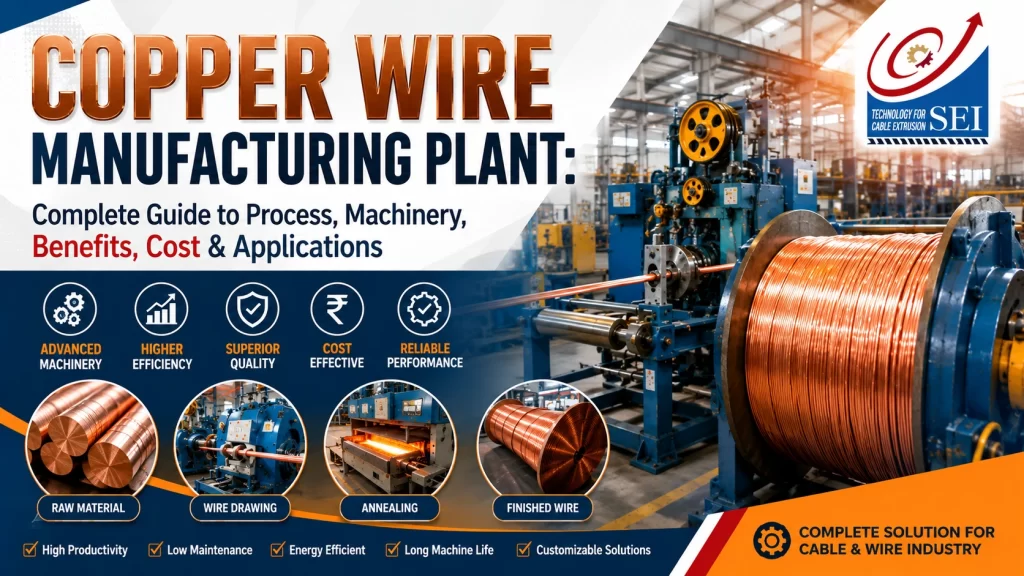
Technical Specifications of a Copper Wire Manufacturing Plant
The selection of equipment is considered an essential process in setting up a Copper Wire Manufacturing Plant. The general performance, quality of the products, and overall efficiency of the plant largely rely upon the technical competence of the machines employed. Contemporary production lines are intended to offer uniform wire diameter, high conductivity, reduced waste of materials, and uninterrupted high-speed production in accordance with diverse industrial requirements.
Modern production plants are usually equipped with automatic control systems, energy-saving motors, precise drawing equipment, modern annealing facilities, and automated systems of supervision. These aspects assist producers in maintaining high international standards of quality, while at the same time lowering their operating expenses and raising production volumes. Businesses assessing the cost of manufacturing plant for copper wire, electrical wire manufacturing plant, or electrical wire manufacturing plant India must consider the technical characteristics first of all.
Typical Technical Specifications
A modern Copper Wire Manufacturing Plant can be customized according to production requirements. Some common specifications include:
- Production Capacity: Customized according to customer requirements
- Raw Material: High Purity Copper Rod
- Finished Product: Copper Wire of Various Sizes
- Operation: Semi-Automatic / Fully Automatic
- Control System: PLC-Based
- Machine Material: Heavy-Duty Mild Steel Structure
- Power Requirement: According to Plant Capacity
- Cooling System: Water Cooling
- Annealing System: Continuous Automatic Annealing
- Drawing Speed: High-Speed Production
- Wire Diameter Range: Customized
- Surface Finish: Smooth & Uniform
- Production Efficiency: High
- Maintenance: Low
- Machine Life: Long Service Life
These specifications may vary depending on production capacity, customer requirements, and factory layout.
Applications of Copper Wire
Copper wire is among the most widely used industrial materials because of its excellent conductivity, flexibility, and durability. A professionally designed manufacturing plant enables industries to produce wires suitable for multiple applications while maintaining consistent quality and dimensional accuracy.
Major application areas include:
- Electrical Cable Manufacturing
- Building Electrical Wiring
- Power Distribution Networks
- Transformer Manufacturing
- Electric Motor Manufacturing
- Generator Production
- Solar Power Projects
- Wind Energy Systems
- Automotive Wiring Harnesses
- Railway Electrical Systems
- Electronic Equipment
- Telecommunication Cables
- Home Appliances
- Industrial Control Panels
- Switchgear Manufacturing
- Battery Cable Manufacturing
- EV Charging Infrastructure
- Medical Equipment
- Defense Applications
- Aerospace Components
Advantages of Installing a Modern Manufacturing Plant
A technologically advanced Copper Wire Manufacturing Plant offers numerous operational and financial advantages compared to conventional manufacturing systems. Automated production improves efficiency while reducing manual intervention and production losses.
Major advantages include:
- Higher Production Capacity
- Better Wire Quality
- Improved Conductivity
- Uniform Wire Diameter
- Reduced Material Wastage
- Low Maintenance Cost
- Energy-Efficient Operation
- Continuous Production
- Faster Manufacturing Cycle
- Long Machine Life
- Easy Operation
- High Return on Investment
- Better Customer Satisfaction
- Increased Profitability
- Scalable Production
Safety Features
Industrial safety is essential for maintaining smooth production and protecting machine operators. Modern machinery incorporates several safety systems that minimize workplace risks and improve operational reliability.
Important safety features include emergency stop systems, overload protection, electrical safety controls, enclosed rotating components, automatic fault detection, digital monitoring, proper grounding systems, and user-friendly operating panels. These features ensure safe machine operation even during continuous production.
Future Scope of Copper Wire Manufacturing
The global demand for copper wire continues to increase because every modern industry depends on electrical power and communication infrastructure. Rapid growth in renewable energy, electric vehicles, industrial automation, smart manufacturing, data centers, and urban infrastructure will further strengthen the copper wire market over the coming years.
Businesses investing today in a modern Copper Wire Manufacturing Plant can benefit from long-term market expansion. Continuous technological advancements are also creating opportunities for manufacturers to improve production efficiency while reducing operational costs through automation and intelligent manufacturing systems.
Why Saini Engineering is the Right Choice
Choosing a good manufacturer is equally essential as the selection of production technology when buying industrial machinery. Saini Engineering has gained the confidence of clients through manufacturing copper wire manufacturing plant products which are reliable, accurate, and efficient enough to fulfill the needs of current industrial standards. The machines are produced using high-quality materials and advanced engineering concepts for better performance and serviceability.
The thing that makes Saini Engineering unique is its dedication towards quality, innovation, and customer satisfaction. Customized manufacturing options are provided according to the production capacity, space available in the factory, automation needs, and objectives of the business.
Copper Wire in Emerging Applications
Aside from the traditional electrical industries, there is also the mention of copper in experimental gardening groups. People try to understand the ideas of electroculture gardening, electro gardening, and electro culture gardening when exploring other means of agriculture. The subjects being explored by people are issues like how to use copper wire in garden, the importance of copper in the garden, and the setting up of an electroculture antenna.
Despite all the ideas still catching the fancy of many, there is no scientific proof of the concepts, and these should not be taken as agricultural methods yet. The scientifically verified value of copper is in the industrial manufacturing process, where the good quality copper wire facilitates power transmission, electronics, communication, heavy industries, renewable energy, transport systems, engineering, and many more. For anyone looking at setting up a new manufacturing plant, they must consider the copper wire manufacturing plant cost, electric wire manufacturing plant cost, and the electric wire manufacturing plant cost in India.
Frequently Asked Questions
What is a Copper Wire Manufacturing Plant?
A Copper Wire Manufacturing Plant is a complete industrial setup that converts copper rods into finished copper wires through processes such as wire drawing, annealing, cooling, testing, and winding.
Which industries use copper wire?
Copper wire is extensively used in electrical, automotive, transformer, renewable energy, electronics, railway, telecommunication, aerospace, construction, and industrial manufacturing sectors.
Is a Copper Wire Manufacturing Plant profitable?
Yes. Due to consistent market demand and the widespread use of copper wire across industries, a well-managed manufacturing plant can provide attractive long-term returns on investment.
Which raw material is used?
High-purity copper rods are the primary raw material used for manufacturing copper wires with excellent electrical conductivity and mechanical strength.
Why is annealing important?
Annealing restores the flexibility and conductivity of copper after wire drawing, making the finished wire suitable for various electrical applications.
How does automation improve production?
Automation increases production speed, reduces manual errors, improves dimensional accuracy, minimizes material wastage, and lowers operating costs.
How do I select the right production capacity?
Production capacity should be selected based on market demand, available investment, factory space, future expansion plans, and target customer requirements.
Does Saini Engineering provide customized machinery?
Yes. Saini Engineering manufactures customized Copper Wire Manufacturing Plant solutions according to customer production requirements and industrial applications.
How important is machine quality?
High-quality machinery ensures consistent production, lower maintenance costs, longer machine life, improved product quality, and better overall profitability.
What is the future of the copper wire industry?
The future is highly promising because increasing investments in renewable energy, electric vehicles, industrial automation, smart infrastructure, and power distribution continue to drive global demand for copper wire.
Conclusion
Copper wire manufacturing continues to remain one of the best sectors of modern-day manufacturing owing to the use of copper wires in almost all electrical and electronic applications. Setting up a technologically advanced Copper Wire Manufacturing Plant facilitates better production of high-quality copper wires with greater efficiency, reduced operating cost, and profitability. Each step involved in the manufacturing of wires, from wire drawing to wire inspection and production management, adds value to the quality and success of the business.
If setting up a reliable and forward-thinking copper wire manufacturing business is what you want, then there can be no other option than Saini Engineering. It is an excellent manufacturing partner that offers complete solutions for the Copper Wire Manufacturing Plant with advanced engineering skills, tailor-made machines, strong structure, energy-saving technology, and technical assistance.