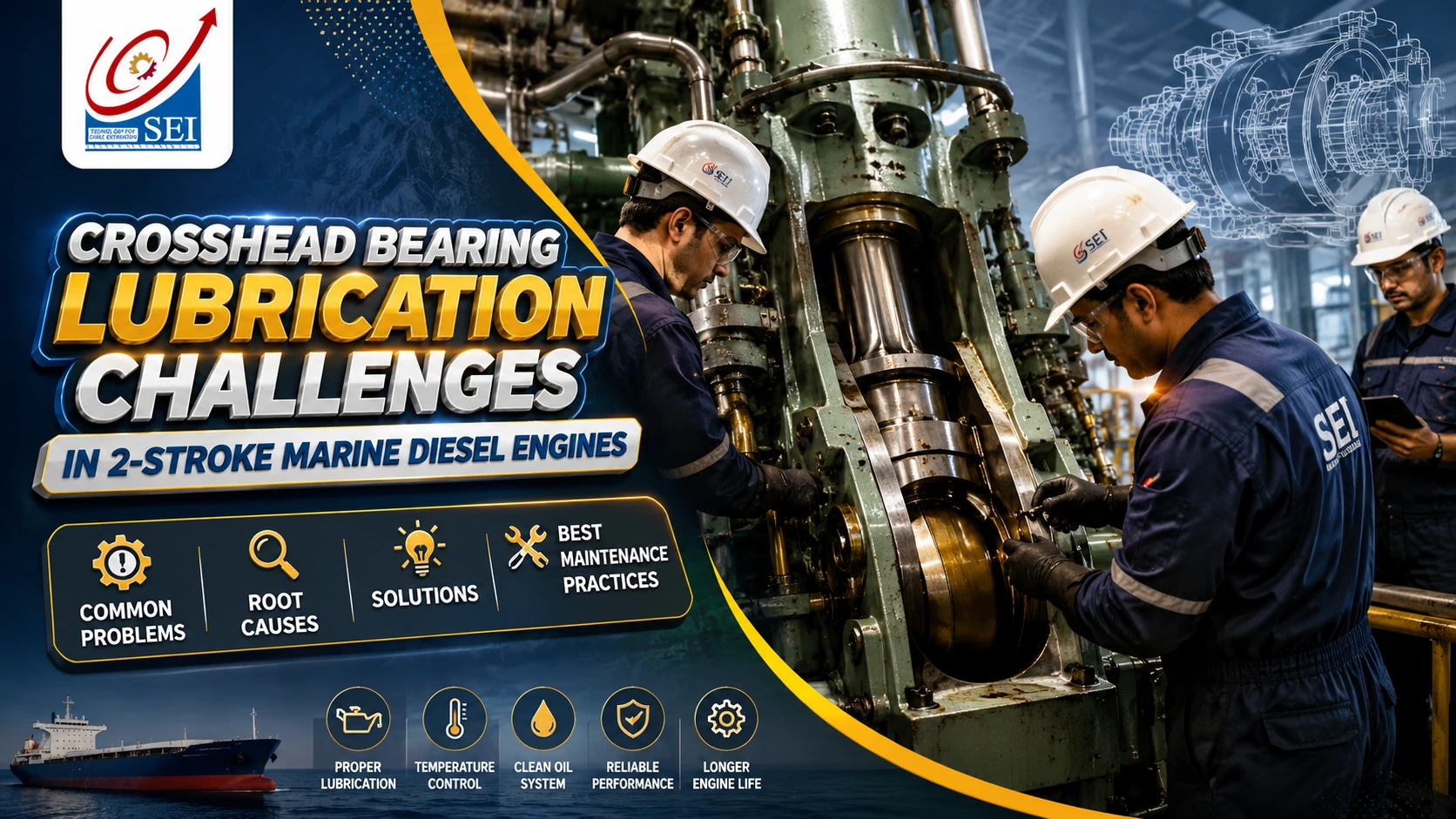
Marine engines are responsible for ensuring the delivery of vital cargo on a daily basis through the oceans. This heavy-duty operation involves the performance of a very special machine that has to work non-stop in the face of tremendous stresses. Any slightest problem with lubrication may cause a number of consequences, from extra expenses to complete engine failure. One of the crucial parts of the machine is the crosshead, which has to transfer enormous combustion stresses at the same time ensuring the smooth motion of the piston.
Our company realizes that marine engineers, ship owners, and maintenance staff need more than spare parts; they need a way of guaranteeing their equipment’s performance. Every minute of delay results in late deliveries, additional costs, and a stressful atmosphere among the crew members. For this reason, our guide is not going to advertise any products but rather to provide solutions to real problems of lubrication. No matter whether you have excessive wear of bearings, abnormal temperatures, metal shavings in lubricating oil, or frequent maintenance problems. Understanding the crosshead behavior will definitely help you save money and time.
Not only does good maintenance of the crosshead ensure protection of expensive parts of the engine, but it also increases efficiency of operation, lengthens the period of service, lowers costs of maintenance, and guarantees safety of the voyage. In this manual, we will be talking about the most frequent issues related to lubrication, their causes, solutions, and prevention measures.
Understanding the Role of Crosshead in 2-Stroke Marine Diesel Engines
The crosshead is among the most important moving parts of a big two-stroke marine diesel engine. Unlike trunk piston engines, a crosshead engine separates the piston from the connecting rod via a special crosshead. This particular construction ensures lower lateral thrust on the piston, reduces wear on the cylinder liners, and enables the engine to function effectively even under very high loads.
Since the crosshead is under constant heavy load in each combustion stroke, its proper lubrication is critical. In case the lubrication system is not functioning properly, the friction increases significantly, the temperatures increase, and the bearing surfaces start to wear much quicker than expected.
The modern marine engines feature highly developed lubrication systems that provide all crosshead parts with a continuous flow of oil. Even a momentary break in the oil supply may cause significant damage to mechanical equipment.
What is a Crosshead Bearing?
A crosshead bearing is the bearing located between the connecting rod and the crosshead pin. It carries extremely high combustion loads while allowing smooth oscillating movement during engine operation.
Unlike rotating crankshaft bearings, a crosshead bearing works under oscillating motion, making lubrication more challenging. Because the movement is limited rather than continuous, maintaining a stable oil film becomes much more difficult.
The crosshead bearing must withstand:
- High combustion pressure
- Heavy cyclic loading
- Constant vibration
- Variable operating temperatures
- Continuous mechanical stress
If the crosshead bearing loses its lubrication film, direct metal-to-metal contact begins almost immediately, leading to overheating, scoring, fatigue damage, and possible bearing seizure.
Why Crosshead Lubrication is So Important
Proper crosshead lubrication is the foundation of reliable engine performance. Lubricating oil creates a protective film between moving surfaces, preventing direct metal contact while carrying away heat and contaminants.
Effective crosshead lubrication provides several important benefits:
- Reduces friction between bearing surfaces
- Controls operating temperature
- Minimizes wear
- Prevents corrosion
- Removes microscopic contaminants
- Extends bearing service life
- Improves engine reliability
- Reduces maintenance costs
Without proper crosshead lubrication, even a high-quality bearing can fail much earlier than its expected service life.
How the Crosshead Lubrication System Works
The crosshead lubrication system continuously supplies filtered lubricating oil through internal oil passages. Pressurized oil reaches the bearing surfaces where it forms a thin hydrodynamic film that separates metal components.
The lubrication process generally follows these steps:
- Oil is pumped from the lubrication sump.
- The oil passes through fine filters.
- Pressure is regulated according to engine requirements.
- Oil enters internal galleries.
- Pressurized oil reaches the crosshead bearing.
- Oil spreads across the bearing surface.
- Heat generated by friction is carried away.
- Oil returns to the sump for filtration and recirculation.
If any stage of this process is interrupted, the entire crosshead lubrication system becomes less effective, increasing the risk of premature bearing damage.
Common Crosshead Bearing Lubrication Challenges
Despite modern engine technology, lubrication-related failures remain one of the leading causes of marine engine maintenance. Most problems develop gradually and often provide warning signs before major damage occurs.
Insufficient Lubricating Oil Supply
One of the most frequent causes of crosshead bearing damage is inadequate oil supply.
Possible reasons include:
- Low oil level
- Blocked oil passages
- Pump malfunction
- Damaged oil pipes
- Incorrect oil pressure
- Internal leakage
When oil flow decreases, the protective film becomes thinner, causing increased friction and accelerated wear.
Oil Contamination
Contaminated oil significantly reduces the effectiveness of crosshead lubrication.
Common contaminants include:
- Metal particles
- Carbon deposits
- Water contamination
- Fuel dilution
- Dust
- Sludge
These contaminants act like abrasive particles, scratching bearing surfaces and reducing lubrication efficiency.
Improper Oil Pressure
Maintaining correct pressure is essential for stable crosshead lubrication.
Pressure that is too low cannot maintain an oil film, while excessive pressure may indicate blockages or other lubrication system problems.
Operators should regularly monitor lubrication pressure during engine operation.
High Operating Temperature
Heat is the enemy of bearing life.
Excessive temperature causes lubricating oil to lose viscosity, making crosshead lubrication less effective. As viscosity decreases, the oil film becomes weaker, increasing metal contact and accelerating wear.
Common causes include:
- Cooling system problems
- Overloaded engine
- Poor oil quality
- Restricted oil flow
- Bearing misalignment
Signs That Your Crosshead Bearing May Be Failing
Early diagnosis can prevent catastrophic engine damage.
Watch for these warning signs:
- Unusual knocking sounds
- Rising bearing temperature
- Reduced oil pressure
- Increased engine vibration
- Metallic particles in lubricating oil
- Dark or burnt oil
- Abnormal wear during inspection
- Reduced engine efficiency
Ignoring these symptoms may result in complete cross head bearing failure, leading to expensive repairs and extended vessel downtime.
Root Causes Behind Cross Head Bearing Failures
Understanding why a cross head bearing fails is more valuable than simply replacing damaged parts. Most failures are the result of multiple small issues occurring together rather than a single major fault.
Poor Lubrication Management
Inadequate maintenance remains one of the biggest reasons behind cross head bearing damage.
Examples include:
- Delayed oil replacement
- Dirty filters
- Incorrect lubricant selection
- Ignoring oil analysis reports
- Irregular inspections
Good lubrication practices significantly reduce unexpected failures.
Bearing Misalignment
Even perfectly manufactured bearings can fail if alignment is incorrect.
Misalignment creates uneven load distribution across the cross head bearing, causing localized overheating and accelerated wear.
Precision alignment during maintenance is essential for long-term reliability.
Contaminated Lubrication Circuit
A dirty lubrication system reduces the effectiveness of crosshead lubrication by restricting oil flow and introducing abrasive particles into the bearing surfaces.
Routine cleaning, filter replacement, and oil analysis help maintain a healthy lubrication circuit.
Overloading the Engine
Operating continuously above recommended engine loads increases pressure on the crosshead, forcing bearings to work beyond their design limits.
This excessive loading generates additional heat and reduces lubricant performance, increasing the likelihood of premature bearing damage.
Incorrect Lubricating Oil Selection
Choosing the wrong lubricant affects the entire crosshead lubrication system.
Oil with incorrect viscosity may fail to create a strong protective film, while poor-quality lubricants can oxidize faster and lose their protective properties under high temperatures.
Selecting manufacturer-recommended lubricants is one of the simplest yet most effective preventive measures.
The Importance of Routine Inspection
Inspections on a routine basis ensure that problems that develop are noted at an early stage by the marine engineers. In the course of carrying out routine maintenance, the state of the crosshead, bearings, lubrication passages, oil pressure, operating temperature, and wear need to be taken into consideration. The above ensures enhanced engine efficiency and extended longevity of the lubricating system.
Practical Solutions to Improve Crosshead Bearing Reliability
Once the source of a lubrication problem has been pinpointed, the next thing to do is to take practical remedial action. Most of the engine problems experienced by ships may be prevented using maintenance methods instead of repairs. This will ensure that the equipment performs effectively and its useful life is prolonged.
The following best practices are widely recommended by experienced marine engineers.
Maintain Clean Lubricating Oil
The quality of lubricating oil directly determines the effectiveness of crosshead lubrication. Even premium-quality oil cannot protect bearings if it becomes contaminated.
To maintain oil quality:
- Replace lubricating oil according to the manufacturer’s schedule.
- Use high-efficiency oil filters.
- Monitor oil cleanliness through regular laboratory analysis.
- Remove water contamination immediately.
- Prevent fuel dilution.
- Keep storage tanks clean and properly sealed.
A clean lubrication system significantly increases the lifespan of every crosshead bearing.
Monitor Oil Pressure Continuously
Oil pressure is one of the earliest indicators of lubrication problems.
Engine operators should monitor:
- Oil pressure fluctuations
- Sudden pressure drops
- Pressure during engine startup
- Pressure at different engine loads
Ignoring abnormal readings may result in severe cross head bearing damage before visible symptoms appear.
Perform Regular Oil Analysis
Oil analysis is one of the most cost-effective predictive maintenance techniques.
Testing lubricating oil helps detect:
- Metal wear particles
- Water contamination
- Oxidation
- Fuel dilution
- Dirt contamination
- Viscosity changes
These reports allow engineers to detect cross-head problems long before mechanical failure occurs.
Check Bearing Clearances
Incorrect bearing clearance affects lubrication performance.
If clearance becomes too small:
- Oil flow reduces.
- Temperature increases.
- Friction rises.
If clearance becomes too large:
- Oil pressure decreases.
- Vibration increases.
- Load distribution becomes uneven.
Routine inspection of crosshead bearing clearances helps maintain proper lubrication.
Inspect Lubrication Passages
Small blockages inside oil passages can interrupt crosshead lubrication without immediately affecting engine performance.
During maintenance:
- Inspect internal oil galleries.
- Clean oil passages.
- Replace damaged pipes.
- Check oil nozzles.
- Verify unrestricted oil flow.
This simple practice prevents many unexpected lubrication failures.
Best Maintenance Practices for Crosshead Systems
Successful marine operators know that preventive maintenance always costs less than emergency repairs. A structured maintenance program protects the cross-head, improves engine reliability, and reduces unplanned downtime.
Recommended maintenance practices include:
- Inspect lubricating oil daily.
- Monitor oil pressure and temperature.
- Replace filters at recommended intervals.
- Perform scheduled oil analysis.
- Inspect the crosshead bearing during overhauls.
- Check bearing alignment.
- Verify lubrication pump performance.
- Monitor abnormal engine noise.
- Investigate vibration immediately.
- Record maintenance history for trend analysis.
Following these practices helps ensure that cross head bearing components continue to perform efficiently under demanding marine operating conditions.
Common Mistakes That Reduce Bearing Life
Many lubrication failures are not caused by defective components but by avoidable maintenance errors.
Some of the most common mistakes include:
Ignoring Early Warning Signs
Operators sometimes continue running engines despite increasing vibration, abnormal noise, or rising temperatures.
These symptoms often indicate developing cross-head problems that should never be ignored.
Using Low-Quality Lubricants
Choosing cheaper oil may reduce immediate operating costs, but poor lubrication quality often leads to premature crosshead bearing failure and much higher repair expenses.
Delaying Oil Filter Replacement
Blocked filters reduce oil flow, limiting the effectiveness of crosshead lubrication and increasing wear.
Skipping Oil Analysis
Without laboratory testing, contamination may remain unnoticed until significant damage has already occurred.
Poor Maintenance Documentation
Accurate maintenance records help identify recurring issues, predict failures, and improve long-term reliability.
Specification Table of Crosshead Bearing System
| Parameter | Typical Specification |
|---|---|
| Engine Type | 2-Stroke Marine Diesel Engine |
| Component | Crosshead Bearing Assembly |
| Bearing Motion | Oscillating |
| Lubrication Type | Forced Pressure Lubrication |
| Lubricating Medium | Marine Engine Lubricating Oil |
| Operating Load | Very High |
| Working Temperature | Depends on Engine Design |
| Oil Pressure Requirement | As Per OEM Recommendation |
| Inspection Interval | Scheduled Maintenance Cycle |
| Oil Analysis Frequency | Regular Laboratory Testing |
| Bearing Material | High-Strength Bearing Alloy |
| Cooling Method | Lubricating Oil Cooling Effect |
| Major Failure Cause | Poor Lubrication |
| Maintenance Priority | Critical |
| Expected Service Life | Depends on Operating & Maintenance Conditions |
Why Preventive Maintenance is Better Than Emergency Repairs
Every unexpected engine shutdown affects vessel schedules, cargo delivery, fuel efficiency, and maintenance budgets. Replacing a damaged cross head bearing is far more expensive than preventing the failure in the first place.
A strong preventive maintenance strategy offers several long-term benefits:
- Higher engine reliability
- Longer component life
- Lower maintenance costs
- Reduced fuel losses
- Improved operational safety
- Better voyage planning
- Fewer emergency breakdowns
- Increased equipment availability
Most lubrication-related failures develop gradually. Regular inspections, proper crosshead lubrication, and timely corrective actions allow engineers to resolve problems before they become serious.
Working Process of Crosshead in a 2-Stroke Marine Diesel Engine
The cross-head is a vital component in a 2-stroke marine diesel engine that connects the piston rod to the connecting rod. Its primary function is to transfer the immense combustion force generated inside the cylinder to the crankshaft while ensuring smooth linear movement of the piston. Unlike trunk piston engines, the cross-head design minimizes side thrust on the piston and cylinder liner, improving efficiency and extending engine life.
Step 1: Combustion Generates Force
The working process begins when fuel is injected into the combustion chamber and ignites under high pressure. The resulting explosion pushes the piston downward with tremendous force.
Step 2: Piston Rod Transfers Motion
The piston is connected to a piston rod, which carries the downward movement directly to the crosshead assembly. This ensures that the piston moves only in a straight vertical path without experiencing side forces.
Step 3: Crosshead Receives the Load
The cross-head receives the reciprocating motion from the piston rod. At this stage, the crosshead bearing absorbs the heavy combustion load while allowing smooth oscillating movement between the connecting rod and the crosshead pin.
Step 4: Crosshead Lubrication Protects Moving Parts
A continuous supply of pressurized lubricating oil is delivered through the crosshead lubrication system. This oil forms a protective film between the crosshead bearing and the crosshead pin, reducing friction, controlling temperature, preventing metal-to-metal contact, and minimizing wear during engine operation.
Step 5: Connecting Rod Converts Motion
The connecting rod receives the linear movement from the cross-head and converts it into rotary motion at the crankshaft. This rotational energy is then used to propel the ship or drive auxiliary equipment.
Step 6: Crankshaft Completes the Power Cycle
The crankshaft rotates continuously, converting the reciprocating movement into usable mechanical power. Throughout this process, the cross-head, crosshead bearing, and crosshead lubrication system work together to ensure stable, efficient, and reliable engine performance.
Why This Working Process Is Important
A properly functioning cross-head system offers several advantages:
- Ensures smooth piston movement
- Reduces side thrust on the cylinder liner
- Minimizes wear of engine components
- Improves lubrication efficiency
- Increases bearing service life
- Reduces maintenance costs
- Enhances engine reliability
- Supports continuous heavy-duty marine operations
Proper maintenance of the cross-head, crosshead bearing, and crosshead lubrication system is essential for preventing unexpected failures and ensuring long-term performance in 2-stroke marine diesel engines.
How Saini Engineering Supports Reliable Marine Maintenance
Here at Saini Engineering, we know that technical information is equally important as high-quality engineering solutions. The people working in the marine industry operate in difficult conditions every day, and proper decision-making about maintenance usually starts with information.
We want to help engineers to understand what leads to problems with lubrication and how they can improve their maintenance planning to avoid extra expenses. Thanks to preventative maintenance procedures, appropriate inspection protocols, and proper engineering solutions, marine professionals can easily extend the lifespan of every cross-head, increase the efficiency of crosshead bearings, improve crosshead lubrication, and avoid cross head bearing failures.
Conclusion
The cross-head assembly is among the highest-loaded assemblies in a two-stroke marine diesel engine, where efficient lubrication is critical. The properly maintained crosshead bearing, which benefits from good crosshead lubrication, enables an engine to function effectively and efficiently, preventing damage to its expensive parts from premature failures. The majority of the problems that emerge on crosshead bearings develop gradually through neglect of the engine lubrication systems, contaminated oil, wrong choice of oil type, clogged passages for oil flow, misalignment, among others.
Through a maintenance plan, testing the oil quality, regular inspection of the lubrication systems, and swift action upon noticing any symptoms, marine engineers will enhance the efficiency of their engines significantly and minimize their operational costs. With the right maintenance strategy and knowledge, all the crossheads will continue performing efficiently throughout their operational lifetime.
Frequently Asked Questions
1. What is a crosshead bearing in a marine diesel engine?
A cross-head bearing connects the connecting rod to the crosshead pin and transfers combustion forces while allowing smooth oscillating movement. Proper lubrication is essential for its reliable operation.
2. Why is crosshead lubrication important?
Crosshead lubrication reduces friction, removes heat, prevents metal-to-metal contact, minimizes wear, and significantly extends the service life of the bearing and surrounding engine components.
3. What causes cross head bearing failure?
The most common causes of cross head bearing failure include insufficient lubrication, contaminated oil, bearing misalignment, blocked oil passages, incorrect lubricant selection, excessive engine loading, and poor maintenance practices.
4. How can lubrication problems be detected early?
Regular oil analysis, monitoring oil pressure, checking bearing temperature, inspecting vibration levels, and examining wear particles in the lubricating oil are effective ways to detect developing problems before major damage occurs.
5. How often should crosshead bearings be inspected?
Inspection frequency depends on the engine manufacturer’s maintenance schedule, operating hours, and vessel operating conditions. Routine inspections during planned maintenance are strongly recommended.
6. How can the life of a crosshead bearing be extended?
Using high-quality lubricating oil, maintaining proper crosshead lubrication, replacing filters on time, performing regular oil analysis, ensuring correct alignment, and following preventive maintenance practices are the best ways to maximize crosshead bearing life.