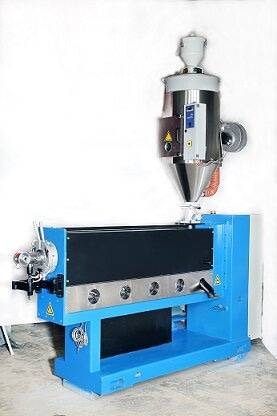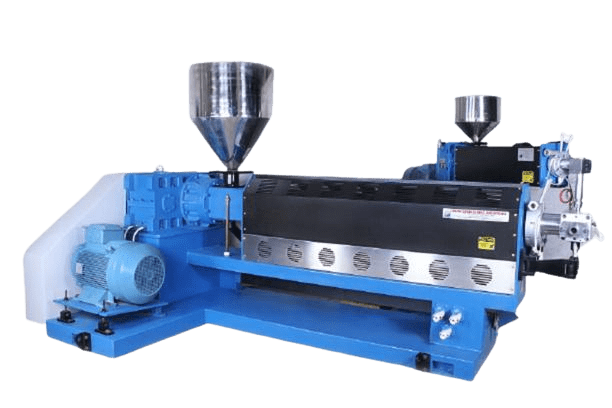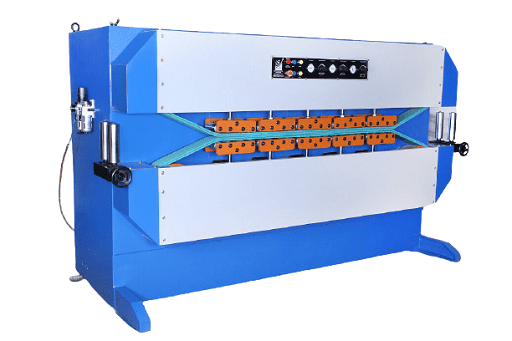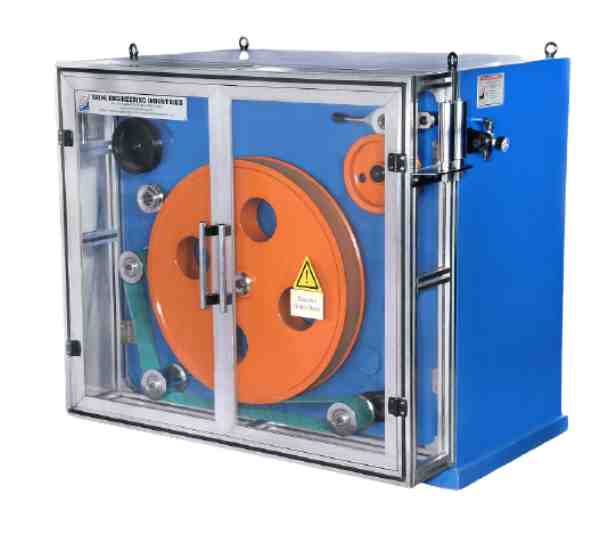
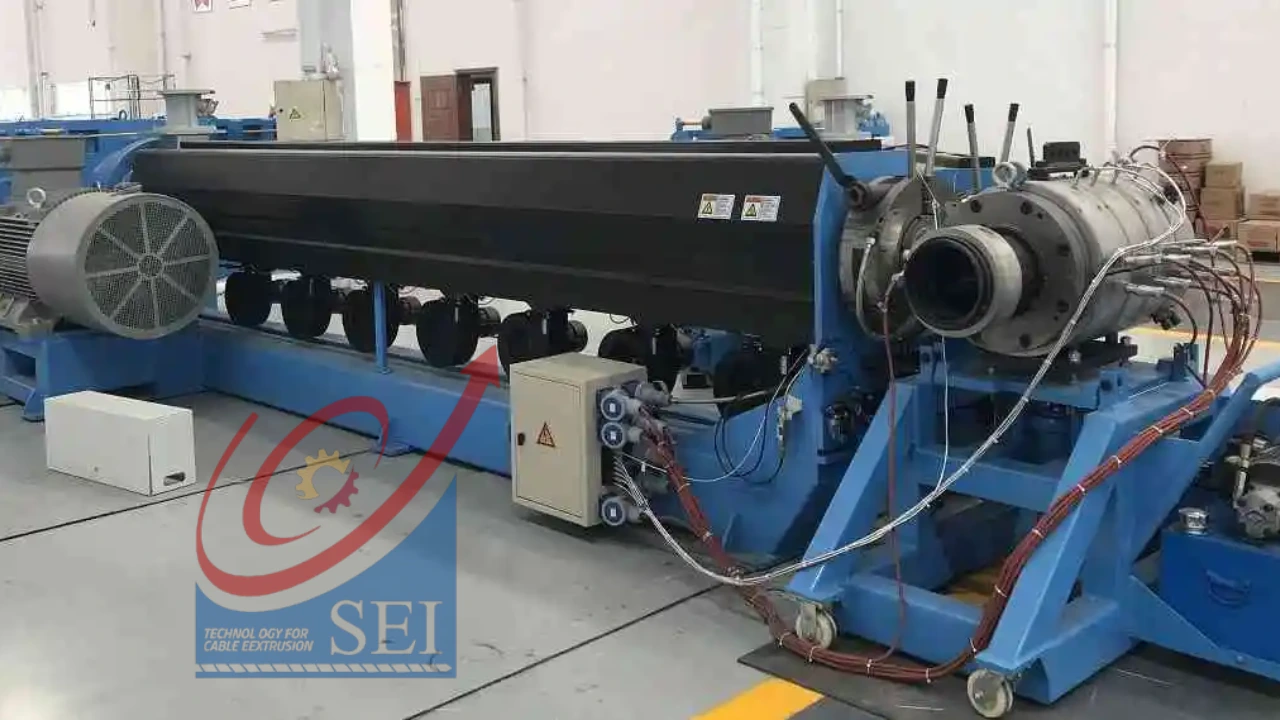
An extruder is a piece of equipment widely used in the manufacturing process. It is mainly used to shape raw materials into products of specific shapes by heating, melting, and extruding them. This process is called extrusion and is commonly used to produce a variety of materials, including plastics, rubber products, metals, food, and more. But what exactly is an extruder, and how does it work? In this blog post, we’ll break down the concept of extrusion, explore how an extruder functions, and look at the types of materials commonly processed through this machine. We will also introduce Saini Engineering Industries, a renowned company specializing in cable extrusion processing machines.
Understanding What is an Extruder
A lot of individuals look for what an extruder is in order to find out the importance of an extruder in industrial manufacturing processes. Extruder machines are employed to mold raw materials to form continuous products such as pipes, films, and plastic profiles. The meaning of extrusion involves the shaping of melted raw material by forcing it through a die. Extruders have become popular due to their high production rate, minimal wastage of material, and uniform quality of the end product.
How Does an Extruder Machine Work?
Have you ever wondered what an extruder is? An extruder is a device that melts and compresses materials before injecting them into molds. Depending on the specific industry where extrusion devices are applied, there are different types of extruders used for plastics, food, rubber, and cables. A good extruder ensures smooth operation and high-quality results in terms of maintaining product dimensions and proper finishing. The extrusion meaning definition involves not only the process itself but also increased efficiency in manufacturing at lower costs.
Benefits of Using Modern Extruders
Extruders in industry are greatly favored since they enable continuous and rapid processes of production. An efficient extruder will effectively handle varying materials without any losses. There are many industries that seek information on “what is extruder?” to know the role of extrusion in increased efficiency. The definition of extrusion is closely associated with the creation of quality products, which have strength and a smooth finish. Saini Engineering Industries has extruders that offer quality performance to manufacturers.
How Does an Extruder Work?
The process of extrusion typically involves four main stages: feeding, melting, shaping, and cooling. Let’s take a deeper look at each one:
Feeding:
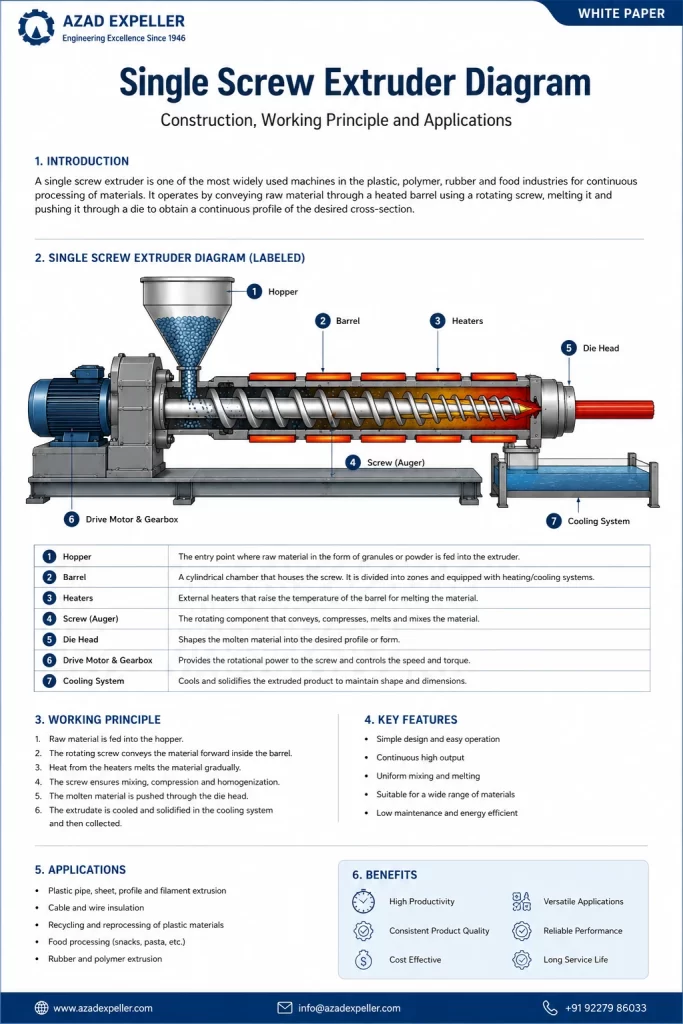
The raw material, usually in the form of pellets, granules, or powders, is fed into the extruder through a hopper. The feed rate, or the speed at which material enters the Cable Extruder, is carefully controlled to ensure consistent output. The material, often in the form of granules or powder, is fed into a machine known as an extruder.
Heating and melting:
The material travels through a heated barrel, which contains rotating screws. The screw or screws in the Cable Extruder rotate while heating the material. This heating causes the material to melt, turning it into a plastic or fluid state. The friction generated by the screw also helps to break down the material’s structure, aiding in its melting or softening. The screw or screws in the extruder rotate while heating the material. Heating systems are fundamental to bringing the material to the right temperature for melting.
Shaping (Forming):
After the material is sufficiently melted or softened, it is forced through a die – a tool that defines the final shape of the product. The screw or screws continue pushing the molten material through the machine. This pressure allows the material to flow through a mold or die, taking on the required shape. The die can be custom-designed to create an infinite range of profiles, from simple tubes and pipes to more complex shapes like window frames, electrical wiring, or even medical devices.
Cooling:
To maintain its shape and solidify it, the extruded material is rapidly cooled, often using air or water baths. Cooling helps to solidify the material, giving it the required rigidity and durability to maintain its form. Once shaped, the products go through a cooling process that solidifies the material, fixing its shape.
For certain products, additional processes like cutting or stretching may occur as the material cools down to the desired size.
Applications of Extrusion
Extrusion is a versatile process used in many industries to produce a wide range of products. Some of the most common applications of extrusion include:
- Plastic Industry: Manufacturing pipes, sheets, films, profiles, and cables.
- Food Industry: Producing snacks, breakfast cereals, pasta, and other food items.
- Automotive Industry: Creating parts such as seals, gaskets, and trim pieces.
- Medical Field: Making items like catheters, tubes, and specialized medical equipment.
- Construction Industry: Producing building materials like window frames, roofing materials, and flooring.
Types of Extruders
Single-Screw Extruders: The single screw extruder is the basic model and works by feeding plastic material (granules, flakes, or powder) from a hopper into the extruder barrel. The material is gradually melted by a single screw, and an agitated mixture is produced by heaters designed along the feed tube. They are used for processing materials like plastics and food products. Single-screw extruders are simple, cost-effective, and widely used in the industry.
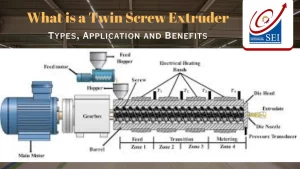
Twin-Screw Extruders: These Cable Extruder have two intermeshing screws that rotate in opposite directions. They are used for more complex processing applications and are typically employed when higher levels of material blending, mixing, or venting are needed. So that plastics, additives, and fillers can be fully and evenly dispersed, stirred, compressed, and kneaded, and higher-quality composite materials can be obtained.
Why Extrusion?
Extrusion offers numerous benefits to manufacturers:
- Efficiency: The continuous nature of the extrusion process allows for high production rates and minimal downtime.
- Versatility: The ability to create a wide range of shapes and profiles makes extrusion suitable for a variety of industries.
- Customization: Dies and extrusion machines can be tailored to meet specific design requirements, producing custom-shaped parts.
- Material Utilization: Extrusion can work with a broad spectrum of materials, including plastics, metals, and food ingredients, and it often allows for precise control over material properties.
- Cost-Effectiveness: The process is often more economical compared to alternative shaping methods such as injection molding or casting, especially when producing large quantities.
Single Screw Extruder and Twin Screw Extruder
The single screw extruder is the most basic and widely used type of extruder, known for its simple design and cost-effectiveness. The system operates through a single rotating screw, which delivers material while the screw melts and shapes the material for common production processes that include pipe and sheet manufacturing. Twin screw extruders utilize two intermeshing screws, which achieve better mixing results while their operators gain improved process management capabilities and higher operational efficiency. The twin screw extruder machine is especially useful for complex materials, compounding, and high-performance applications. Engineers use a twin screw extruder diagram to study the interaction between dual screws, which improves mixing results and product output quality.
Single screw systems work effectively for simple tasks, but twin screw machines meet the needs of advanced production processes. Both types possess distinct advantages that depend on the specific needs of the production process. The selection of an Cable Extruder requires consideration of three factors: material type, output capacity, and product design. The right machine selection enables industries to achieve optimal results for their particular tasks. This procedure results in improved operational efficiency while maintaining uniformity in product standards.
Saini Engineering Industries – Cable Extrusion Processing Machines
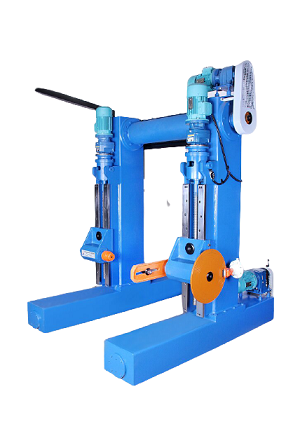
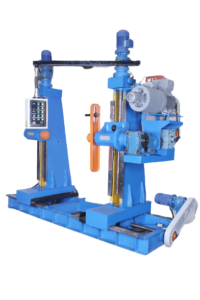
When it comes to cable extrusion, Saini Engineering Industries stands out as a leading manufacturer and supplier of high-quality cable extrusion processing machines. With 47+ years of experience in the field of extrusion technology, Saini Engineering provides specialized equipment for the production of various types of cables, including power cables, communication cables, and flexible cables.
Their state-of-the-art cable extrusion machines are designed for optimal performance, ensuring that the materials used for cables, such as PVC, polyethylene, and rubber, are processed efficiently and precisely. Our wire and cable extrusion lines are renowned for their high levels of productivity and flexibility. They offer you the most modern and updated software technologies and top-quality resistant components. The machines provided by Saini Engineering Industries incorporate advanced features like high-speed operation, energy efficiency, and user-friendly interfaces, making them the ideal choice for manufacturers looking to produce durable and reliable cables.
By leveraging the expertise and cutting-edge technology of companies like Saini Engineering, industries involved in cable manufacturing can improve their production processes, reduce material waste, and maintain high standards of quality.
Conclusion
Extruders are powerful machines used in a variety of industries to transform raw materials into a wide array of shapes and products. By heating, melting, and forcing materials through a mold or die, extruders make it possible to create continuous profiles with precision and efficiency. Aware of this requirement, Bausano is actively committed to developing its counter-rotating extrusion range in this direction. We have developed new cutting-edge technologies, such as the cylinder induction heating system, and innovative extruders designed to recycle polymers like PVC and polyolefins. This progress is a testament to our genuine commitment to promoting sustainability.
Understanding how extruders work gives insight into the complexity behind many everyday items, highlighting the importance of this essential manufacturing process. Companies like Saini Engineering Industries, which specialize in cable extrusion processing machines, play a crucial role in improving and advancing the extrusion technology for various applications, particularly in cable manufacturing.